
Why Vulnerable Road User Safety Is One of the Biggest Accident Trends in 2026
Vulnerable road user safety has become one of the most important accident trends to watch in 2026. The phrase refers to people who do not have the physical protection of a vehicle shell around them, including pedestrians, cyclists, motorcyclists, scooter riders, and many people using small micromobility devices. When a crash happens, these road users usually absorb the direct force of impact, which is why even a collision at city speeds can cause life-changing injuries or death.
This topic fits the direction of Accident Wiki because it sits at the intersection of urban traffic safety, road safety policy, and global accident trends. It also connects naturally with your existing coverage of dangerous driving in Nagpur, Gurgaon blackspots, Delhi’s road safety roadmap, and the push for mandatory speed governors after the Ladhowal crash.
Who Counts as a Vulnerable Road User?
The term is broader than many readers expect. It includes pedestrians and cyclists, but it also covers motorcyclists, people on e-bikes, riders of e-scooters, children on the way to school, older adults crossing busy intersections, and road workers exposed to moving traffic. If a person shares the road without the structural protection of a passenger car, their injury risk rises sharply in any collision.
That matters because mobility is changing. More cities want people to walk, bike, and use shared transport. Delivery work has expanded. E-bikes and e-scooters are more common in urban areas. Streets that were built mostly for faster-moving cars now carry more users with different speeds, visibility, and protection levels.
Why Vulnerable Road User Safety Is Trending Right Now
This subject is trending because the numbers remain serious even when overall traffic deaths show signs of improvement. Pedestrian deaths remain high in the United States, and at the global level vulnerable road users still make up more than half of all road traffic deaths. That means the problem is not limited to one country or one type of road. It is a long-running safety issue tied to how roads are designed, how vehicles are built, and how people behave around crossings, turns, and shared lanes.
The trend is also getting more policy attention. Transportation agencies are emphasizing safer conditions for people who are walking, biking, and rolling. Cities are talking more openly about automated enforcement, lower-speed corridors, protected bike lanes, and safer school-zone design. Vulnerable road user safety is trending because it has become a real prevention priority, not just a headline phrase.
What Is Driving the Risk?
1. Speed Still Changes Everything
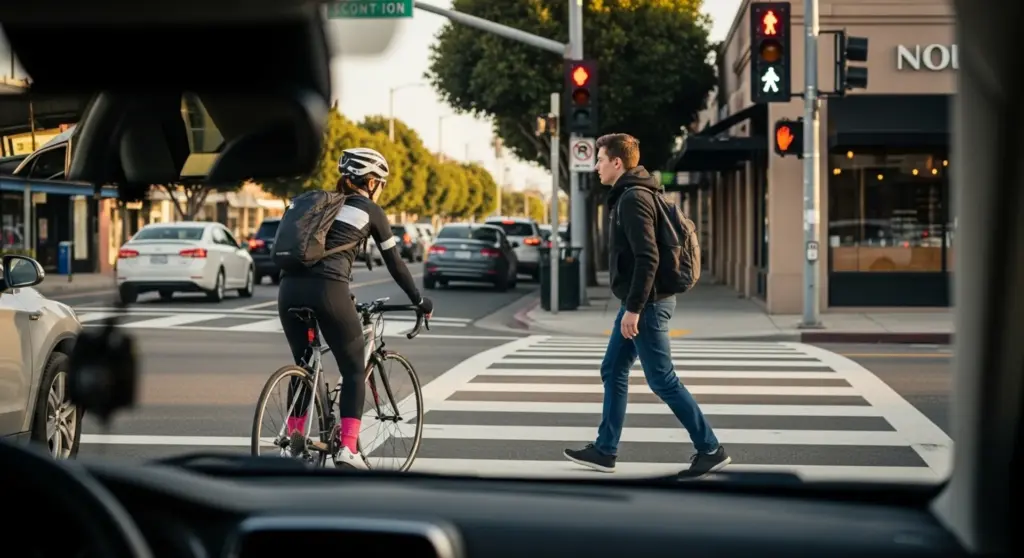
Speed remains one of the biggest reasons vulnerable road users suffer severe injuries. A driver may feel only slightly faster at 35 or 40 mph than at 25 mph, but for a pedestrian or cyclist that difference can completely change the outcome of a crash. Faster speeds reduce reaction time, increase stopping distance, and make every impact more violent. This is why your article on speed governors after the Ladhowal crash connects to a much bigger safety discussion.
2. Distraction and Failure to Yield
Many vulnerable road user crashes happen during ordinary urban moments: turning through a crosswalk, checking a phone at a light, or rushing to beat traffic. Failure to yield remains a major issue because some drivers scan for other vehicles but do not fully register a person walking or biking through the conflict area.
3. Bigger Vehicles and Blind Zones
Vehicle design plays a larger role than many people think. Taller front ends, larger blind zones, and reduced visibility during turns can make pedestrians and cyclists harder to see and more likely to suffer severe trauma in a collision. Vulnerable road user safety is now a vehicle-design issue as much as a behavior issue.
4. Streets Built for Flow Instead of Safety
Some roads are engineered to move traffic quickly, not to protect people outside vehicles. Wide lanes invite speeding. Long crossing distances expose pedestrians for more time. Weak separation between cars and bikes increases the chance of side-impact and turning collisions. Your post on Gurgaon blackspots already shows how recurring danger is often tied to location-specific design problems, not random bad luck.
Why This Matters for Cities, Fleets, and Everyday Drivers
For cities, vulnerable road user safety is now a planning issue as much as a traffic issue. A city cannot claim to support walking, cycling, and public transport if the basic trip to a bus stop or crosswalk feels dangerous. Safe mobility depends on connected sidewalks, calmer intersections, protected bike routes, and enforcement where high-risk behavior is common.
For fleets and commercial operators, the issue affects liability, training, and vehicle procurement. Companies that run buses, vans, or delivery vehicles should be thinking about speed control, camera systems, blind-zone reduction, route planning, and driver coaching. That makes your existing post on the Gerik bus crash especially relevant.
For everyday drivers, the lesson is simple: one of the most dangerous crashes on any street is a preventable impact with someone who had almost no protection. Drivers who slow down before turns, fully clear crosswalks visually, give more passing space, and stay off their phones reduce the chance of catastrophic harm.
What Better Road Safety Policy Looks Like in 2026
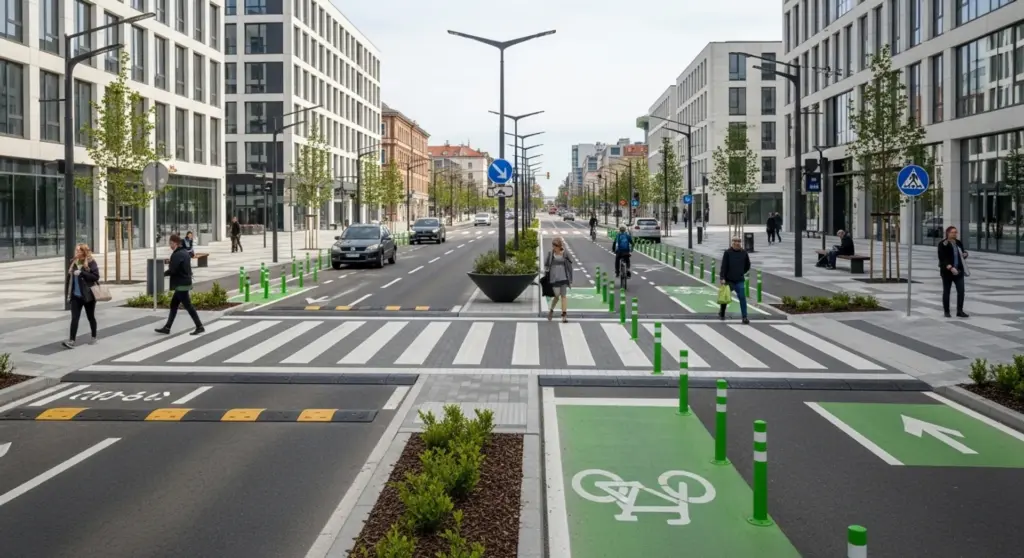
Good policy does not depend on one silver bullet. It works through layers: lower-risk street design, better data on crash hotspots, targeted enforcement in high-harm areas, and public education that focuses on predictable mistakes. Policymakers also need to stop treating every crash as isolated. When the same corridor keeps producing injuries, the road is sending a message.
That is why posts like Delhi’s road safety roadmap matter. Strong policy starts with identifying where serious harm happens, then matching infrastructure and enforcement to that risk. The same approach applies globally. Whether the setting is a dense city center, a school zone, or a fast arterial road, the principle is the same: design for the mistakes people are likely to make, not the perfect behavior we wish they had.
Practical Prevention Steps That Actually Help
- Reduce speeds on urban corridors, school zones, and high-pedestrian streets.
- Upgrade crosswalks and lighting where people already cross, not only where maps say they should.
- Protect bike movement with physical separation where traffic volumes and speeds are high.
- Use data to fix blackspots before another severe crash forces action.
- Improve vehicle visibility through better mirrors, cameras, and safer front-end design.
- Train commercial drivers to anticipate pedestrians, cyclists, and scooter riders during turns and deliveries.
- Run enforcement where harm is highest, especially for speeding, distracted driving, and failure to yield.
Final Thoughts
Vulnerable road user safety is one of the biggest accident trends in 2026 because it reveals the true quality of a transportation system. A road is not genuinely safe just because traffic is moving. It is safe when children can cross, cyclists can travel predictably, pedestrians can reach transit stops, and drivers can navigate without creating constant risk for everyone outside their vehicles.
For Accident Wiki, this topic offers strong long-term SEO value because it connects policy, prevention, infrastructure, and real-world crash analysis. It is timely, practical, and broad enough to support future internal linking across urban traffic safety, road safety policy, and global accident trends.