
Pedestrian AEB Systems in 2026: Why Automatic Braking Matters for Urban Accident Prevention
Pedestrian AEB systems are becoming one of the most important road safety topics in 2026. These systems use cameras, radar, sensors, or a mix of technologies to detect a pedestrian in front of a vehicle. If the driver does not brake in time, the system can warn the driver or apply the brakes automatically.
This matters because many serious urban crashes happen in ordinary moments. A driver turns through a crosswalk. A pedestrian steps into a poorly lit intersection. A vehicle approaches a stopped car too quickly. A child walks near a school zone. In those seconds, reaction time can decide whether a near miss becomes a life-changing accident.
Pedestrian automatic emergency braking is not a magic shield. It cannot fix every bad road, distracted driver, blind zone, or speeding problem. Still, it adds another layer of protection when human reaction fails. That makes it a strong topic for Accident Wiki, especially alongside your guides on vulnerable road user safety, vehicle blind zones, and blackspots and traffic death trends.
Why Pedestrian AEB Systems Are Trending in 2026
The biggest reason is policy. The National Highway Traffic Safety Administration finalized a major rule that requires automatic emergency braking and pedestrian automatic emergency braking on new passenger vehicles and light trucks by September 2029. That rule keeps this topic active in 2026 because automakers, safety experts, cities, drivers, and fleets are preparing for stronger crash-avoidance expectations.
The safety goal is clear. AEB can reduce frontal crashes when a driver reacts too late. Pedestrian AEB adds a specific layer for people walking near the vehicle path. NHTSA says pedestrian AEB technology must detect pedestrians in daylight and darker nighttime conditions. That matters because many severe pedestrian crashes happen when visibility is poor.
Pedestrian AEB systems are also trending because vehicle technology now sits inside a bigger road safety debate. Cities want fewer pedestrian deaths. Families want safer school zones. Fleet operators want fewer preventable crashes. Drivers want help in complex traffic. Safety agencies want technology that works in real-world conditions, not only in perfect test scenarios.
How pedestrian automatic emergency braking works
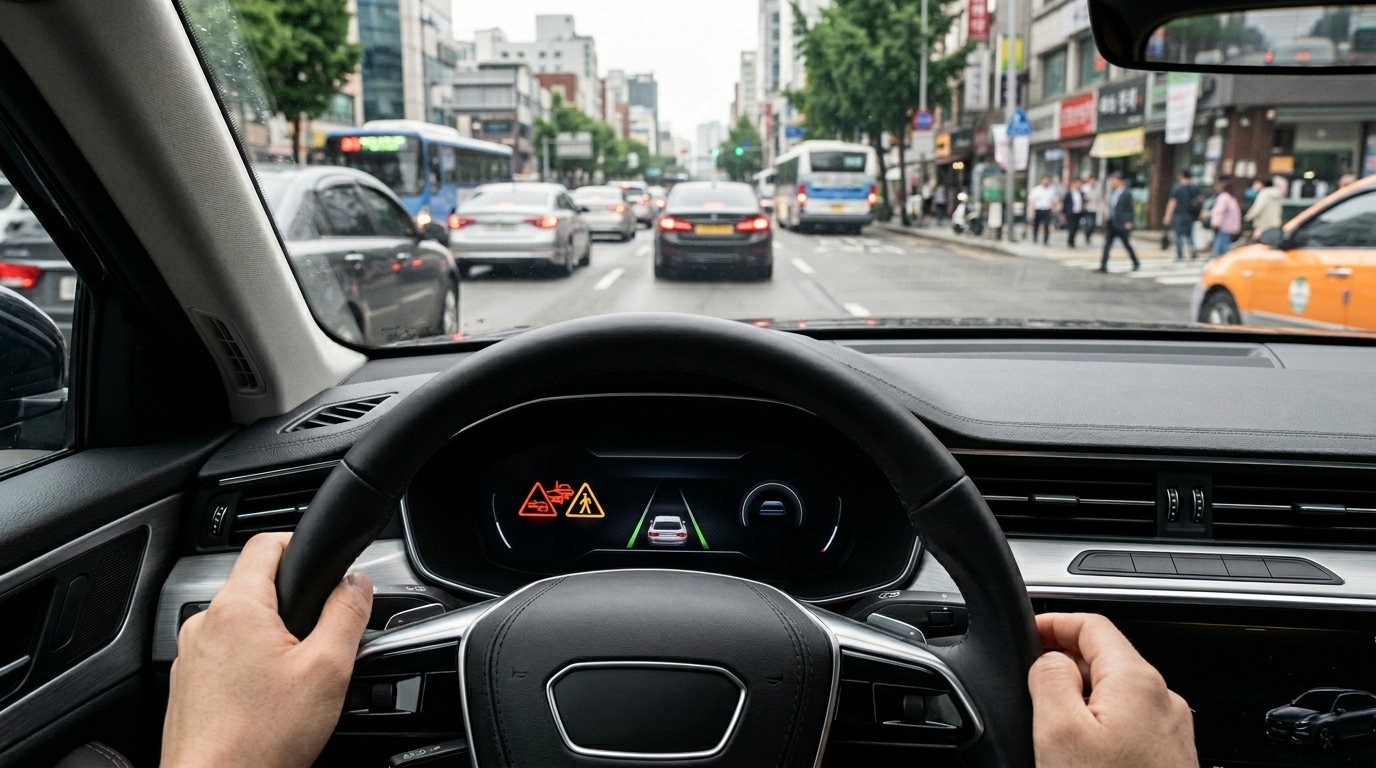
Pedestrian AEB uses onboard detection tools to identify a person in or near the vehicle path. The system may first warn the driver. If the driver does not respond quickly enough, it may apply braking force to reduce speed or avoid impact. The exact response depends on the vehicle, speed, road conditions, sensor quality, software, and system design.
The concept is simple, but the road is not. Pedestrians move unpredictably. Drivers turn while scanning multiple threats. Street lighting may be weak. Rain, glare, shadows, parked cars, and road curves can affect detection. This is why the quality of testing and system performance matters so much.
Detection is only useful when the system reacts fast enough
A vehicle may detect a pedestrian, but timing decides the result. A late warning may not give the driver enough time. A weak braking response may reduce the crash speed but not prevent impact. A stronger system can help more when it identifies danger early and reacts quickly.
Speed also changes everything. At lower speeds, a vehicle has more time and distance to stop. At higher speeds, the system has less margin. That is why AEB technology should work together with speed management, safer street design, and driver attention.
Nighttime performance is a major safety issue
Nighttime pedestrian detection deserves special attention. Drivers may struggle to see people wearing dark clothing, crossing at poorly lit locations, or walking near parked cars. A system that works only in perfect daylight leaves a major gap.
For Accident Wiki readers, this connects directly with urban traffic safety. Crosswalk lighting, signal timing, curb extensions, lower speeds, and better vehicle detection all support the same goal. The best outcome is not only a car that brakes at the last second. The best outcome is a road system that makes conflict less likely in the first place.
Why pedestrian AEB matters for vulnerable road users
Pedestrians, cyclists, scooter riders, children, older adults, and road workers face higher risk because they do not have a vehicle shell around them. When a crash happens, they absorb the force directly. Even a low-speed impact can cause head injuries, fractures, spinal trauma, internal injuries, or long-term disability.
Pedestrian AEB matters because it addresses one of the most common crash patterns: the driver sees the danger too late. The system can add a backup response when attention, visibility, or reaction time fails. That is especially important near schools, transit stops, parking lots, downtown intersections, and high-risk corridors.
Still, the technology should not make drivers careless. A driver must still slow down, scan crosswalks, yield properly, and avoid phone use. AEB is a safety layer, not permission to drive faster or pay less attention.
Blind zones can still create danger
Vehicle blind zones remain a serious problem. Taller hoods, thick pillars, mirrors, parked vehicles, and poor street angles can hide pedestrians from view. Pedestrian AEB may help in some moments, but it cannot replace clear visibility.
This is why Accident Wiki’s guide on vehicle blind zones and pedestrian safety pairs well with this topic. Visibility and automatic braking should work together. If a vehicle gives the driver a better view and the system adds emergency braking, the safety margin improves.
What Drivers, Cities, and Fleets Should Do Before 2029
The 2029 requirement matters, but road safety cannot wait for every vehicle on the road to have newer technology. Many older cars will remain in use for years. Some current systems will perform better than others. Cities still need safer intersections. Drivers still need better habits. Fleets still need training and accountability.
That is the practical lesson for 2026. Pedestrian AEB systems can reduce risk, but they work best inside a layered safety strategy. Road design, enforcement, vehicle design, driver behavior, and emergency response all matter.
How drivers should use AEB safely
Drivers should treat AEB as backup support. They should not test it, trust it blindly, or assume it will catch every pedestrian. The safest driver still slows down before crosswalks, looks twice before turning, avoids distraction, and adjusts for rain, darkness, glare, and heavy foot traffic.
Vehicle owners should also read the manual. Some systems have limits. They may work differently at certain speeds or in poor weather. Dirty sensors, damaged cameras, worn tires, low visibility, or poor maintenance can reduce performance. A driver who understands those limits can avoid false confidence.
Drivers should also remember that emergency braking can surprise following traffic. If a vehicle brakes suddenly, a tailgating driver behind it may crash into the rear. That does not mean AEB is bad. It means safe following distance still matters, even in a world with smarter cars.
Drivers should not confuse AEB with self-driving
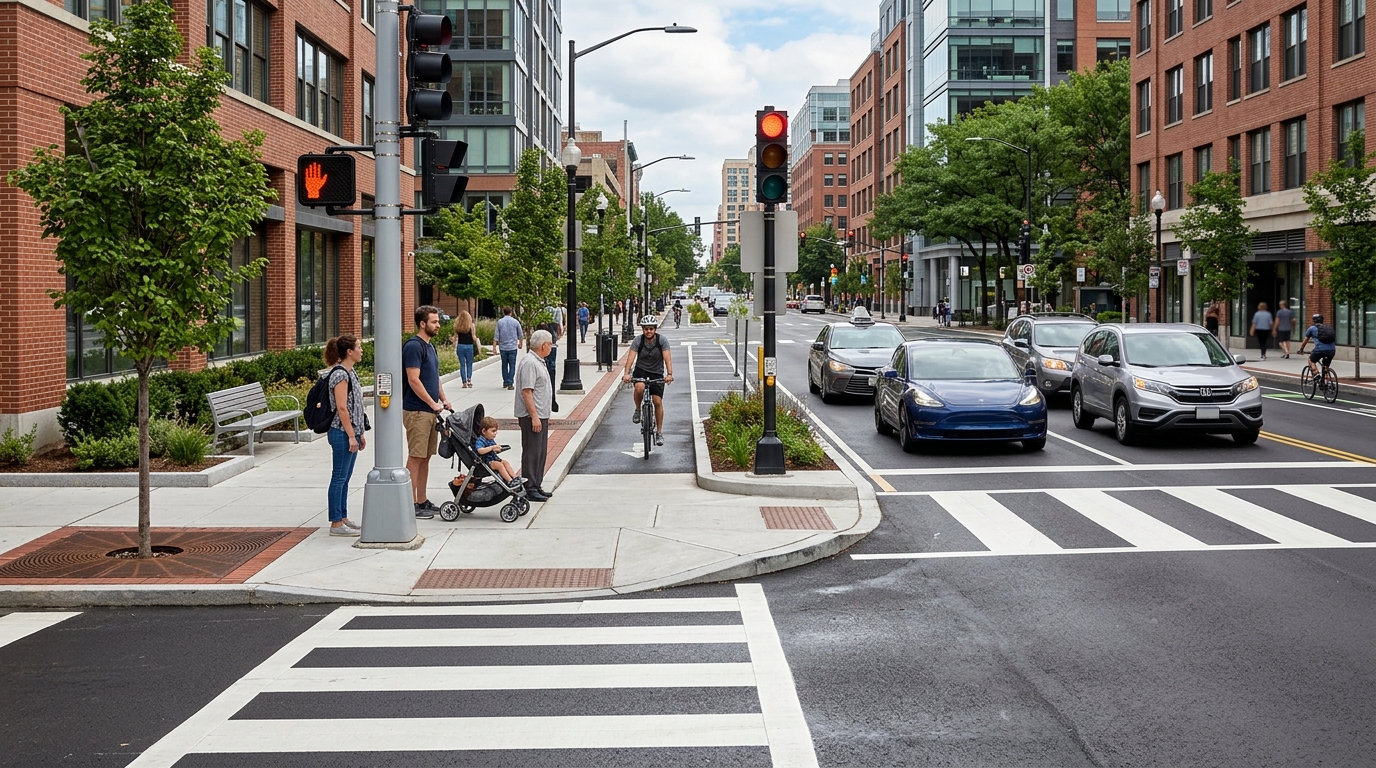
AEB does not make a vehicle autonomous. It does not handle every situation. It does not remove driver responsibility. It only reacts to certain hazards when the system detects them and decides that braking is needed.
This is similar to the wider problem with driver-assistance technology. Safety tools help, but they do not replace judgment. Drivers must stay engaged and ready to act. The system is there for emergency support, not everyday decision-making.
What cities and road agencies should prioritize
Cities should not wait for vehicle technology to solve pedestrian crashes. Better roads make AEB more effective because they reduce confusion and improve visibility. Clear crosswalks, protected intersections, shorter crossings, better lighting, slower speed limits, and daylighted corners all help.
Road agencies should also study accident-prone areas. If the same intersection keeps producing pedestrian crashes, the problem may involve more than driver behavior. It may involve poor design, bad lighting, weak signals, high turning speeds, long crossing distances, or confusing lane geometry.
Accident Wiki’s article on blackspots and vulnerable road users supports this point. Technology works best when agencies also fix the places where crashes keep happening.
For an official external resource, readers can review the NHTSA automatic emergency braking rule announcement. It explains the federal safety rule and why AEB and pedestrian AEB are expected to reduce crashes, injuries, and deaths.
Fleet operators should also act early. Delivery companies, taxi operators, school transport providers, municipal fleets, and service vans operate in areas with frequent pedestrian conflict. They should review vehicle purchasing, driver training, camera systems, route planning, maintenance, and crash data.
A fleet should not only ask whether a vehicle has AEB. It should ask whether drivers understand the system, whether sensors stay clean, whether routes expose drivers to repeated crosswalk conflicts, and whether telematics show risky behavior. A safer vehicle can still crash if the operation around it is careless.
Prevention still depends on layered safety
The strongest safety strategy uses several layers at once. AEB helps when danger appears. Lower speeds reduce crash force. Better lighting improves detection. Safer intersections reduce conflict. Stronger driver training improves decisions. Better crash data shows where agencies should act first.
That layered approach is the real lesson. Pedestrian AEB is important, but it should not become an excuse to ignore street design or driver behavior. A road system becomes safer when every layer reduces the chance of serious harm.
Pedestrian AEB systems will shape road safety conversations through 2026 and beyond. The federal rule gives the technology a clear future. The real challenge is making sure it works in the messy conditions where crashes actually happen: darkness, turning conflicts, school zones, busy intersections, poor visibility, and high-risk corridors.
For drivers, the message is simple. Use the technology, but do not depend on it alone. For cities, the message is stronger. Build roads where pedestrians are easier to see and harder to hit. For fleets, the message is practical. Train drivers, maintain systems, and treat near misses as warnings.
If those groups act together, pedestrian AEB can become more than another vehicle feature. It can become part of a stronger accident-prevention system that protects people before the impact happens.