
Rural Roadway Departure Crashes in 2026: Why Local Roads Still Need Better Safety Planning
Rural roadway departure crashes in 2026 remain one of the most serious road safety problems. A roadway departure happens when a vehicle leaves its travel lane. The vehicle may run off the road, cross the centerline, strike a fixed object, roll over, or hit another vehicle head-on.
These crashes often happen on roads that look simple. A two-lane rural road may have light traffic, open space, and few intersections. That can create a false sense of safety. Drivers may travel faster, pay less attention, or fail to adjust for curves, hills, animals, weather, or poor lighting.
Local roads need better planning because many dangerous rural locations do not look like obvious crash zones. A curve may only become dangerous at night. A shoulder may only fail during rain. A tree line may only become deadly when a tired driver drifts a few feet to the right.
Rural roadway departure crashes in 2026 should not be treated as random events. Many follow patterns. Unsafe curves, narrow shoulders, faded markings, poor signs, roadside hazards, steep slopes, and limited lighting can all increase risk. Safer planning starts when communities identify those patterns before more people get hurt.
Why Rural Roadway Departure Crashes in 2026 Still Happen
Rural roads create a different safety challenge than city streets. Urban areas often have traffic signals, sidewalks, streetlights, lower speed limits, and more visible enforcement. Rural areas may have long stretches of open road, higher speeds, limited shoulders, and fewer escape options.
When something goes wrong, the result can be severe. A vehicle that leaves the road at highway speed may hit a tree, utility pole, ditch, fence, culvert, embankment, or parked equipment. If the vehicle crosses the centerline, the crash may become a head-on collision.
Emergency response can also take longer in rural areas. Longer distances, limited cell service, and fewer nearby hospitals can make serious crashes even more dangerous. That is why prevention matters so much.
Curves, Shoulders, And Road Edges Create Hidden Risk
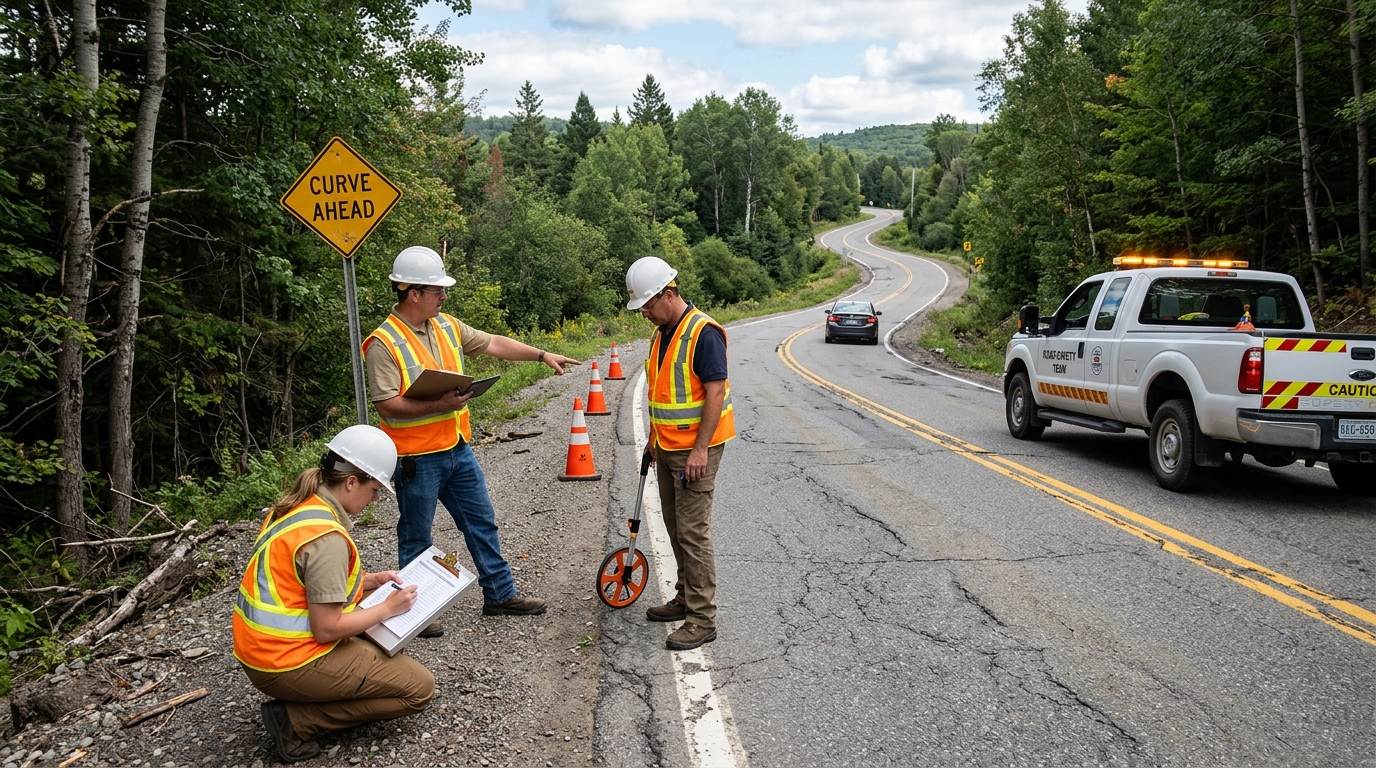
Many roadway departure crashes start with a small mistake. A driver enters a curve too fast. A tire drops off the pavement edge. A vehicle drifts onto gravel. The driver overcorrects and loses control.
These moments can happen quickly. A narrow shoulder gives the driver little room to recover. A steep drop-off at the pavement edge can pull the vehicle sideways. Loose gravel can reduce control. Poor drainage can make the edge soft after rain.
Better design can reduce these risks. Wider shoulders, safer pavement edges, clearer lane markings, curve warning signs, and rumble strips can help drivers stay on the road. Guardrails and clear zones can reduce injury when a vehicle leaves the lane.
Roadside Hazards Can Turn A Mistake Into A Fatal Crash
Not every road departure must become a deadly crash. The danger often comes from what sits beside the road. Trees, poles, rocks, deep ditches, culverts, and steep slopes can make a simple lane departure catastrophic.
Safety planning should ask one direct question: what happens if a vehicle leaves the lane here? If the answer is a high-speed impact with a fixed object, the road needs attention.
Communities can reduce risk by improving clear zones, shielding hazards, adding barriers, relocating fixed objects, or improving shoulder recovery areas. These changes may not look dramatic, but they can save lives.
Night Driving Makes Rural Departures Worse
Rural roads can become much more dangerous after dark. Drivers may face limited lighting, dark curves, animals, glare from oncoming headlights, and sudden changes in pavement. A curve that feels simple in daylight may become harder to read at night.
Lane markings matter more in these conditions. Faded centerlines and edge lines make it harder for drivers to judge position. Reflective signs, raised pavement markers, chevrons, and edge lines can help guide drivers through risky sections.
Nighttime safety also depends on driver behavior. Speeding, fatigue, distraction, and alcohol increase the risk of leaving the lane. Road design cannot fix every bad choice, but it can reduce the chance that one mistake becomes fatal.
Rural Blackspots Need A Systemic Safety Approach
Some dangerous roads have a clear crash history. These locations are often called blackspots. A sharp curve with repeated run-off-road crashes deserves fast attention. A bridge approach with frequent centerline crossings should not wait for another severe crash.
However, rural safety planning should not only react to past crashes. Some roads have the same risk factors as known crash sites but have not yet recorded many serious collisions. Waiting for injuries before acting is a weak safety strategy.
A systemic approach looks for common risk factors across the network. Planners can review curve radius, traffic speed, shoulder width, lane width, pavement edge condition, roadside hazards, lighting, and crash history. This helps agencies treat many risky sites, not just the worst one.
Crash Maps Should Include More Than Fatality Counts
Fatality counts matter, but they do not tell the full story. A rural curve with several near misses may still be dangerous even before a fatal crash happens. Property damage, injury crashes, police reports, road complaints, and maintenance records can all reveal risk.
Communities should also listen to local drivers. Residents often know where vehicles leave the road, where animals cross, where fog settles, and where pavement edges break down. Their experience can help planners find risks that raw data may miss.
This connects with Accident Wiki’s article on traffic deaths, blackspots, and vulnerable road users. That same blackspot thinking can help rural agencies find dangerous road segments before another severe crash occurs.
How Local Roads Can Reduce Departure Crashes

Rural roadway departure crashes in 2026 need practical solutions. Small communities may not have unlimited budgets. Still, many proven countermeasures do not require rebuilding an entire road.
Start with visibility. Drivers need to understand the road before danger appears. Clear signs, reflective markings, chevrons, delineators, and pavement lines can help drivers read curves and road edges sooner.
Next, improve recovery space. Shoulders, pavement edges, and clear zones matter because drivers sometimes drift. A safer road gives them a better chance to recover without a severe crash.
Proven Countermeasures Can Work On Local Roads
Rumble strips can warn drivers when they leave the lane. Edge lines can help drivers track the road at night. High-friction surface treatments can improve grip on curves. Guardrails can shield steep slopes, water, or fixed objects.
Curve warning signs should match the real risk. A generic sign may not be enough for a sharp curve with a history of crashes. Chevrons, advisory speed signs, and better lighting may help drivers slow before the danger point.
Centerline treatments can also reduce head-on crashes. Wider centerlines, rumble strips, and better markings can help drivers avoid crossing into opposing traffic. This issue connects with Accident Wiki’s guide on wrong-way driving detection systems, because both topics focus on preventing high-speed conflicts before impact.
Local Agencies Need Maintenance, Not Just New Projects
Maintenance is a safety tool. Faded markings, missing signs, damaged guardrails, broken shoulders, and poor drainage can all increase roadway departure risk. A low-cost repair may prevent a major crash.
Local agencies should schedule regular inspections for known risk areas. Curves, hills, bridge approaches, narrow roads, and roads near trees or ditches deserve special attention. Seasonal checks can also help because storms, flooding, snow, and heat can damage pavement edges.
Roadside vegetation matters too. Trees and brush can block signs, hide curves, reduce sight distance, and limit recovery space. A road may become safer after crews trim vegetation, clear sight lines, and restore reflective signs.
Modern safety planning can also use data tools. Crash maps, maintenance reports, traffic speed data, and public complaints can guide priorities. The Federal Highway Administration offers rural and local road safety resources through its training, tools, guidance, and countermeasures for local practitioners.
Rural roadway departure crashes in 2026 should push communities to think beyond blame. Driver behavior matters, but road design also shapes crash risk. A forgiving road gives drivers more time, better guidance, and safer recovery space.
The best local road plans use layers. Identify risky curves. Improve markings. Add rumble strips where appropriate. Maintain shoulders. Remove or shield hazards. Upgrade signs. Study crash patterns. Listen to local reports. Then repeat the process before the next crash cluster appears.
Rural roads do not need to stay dangerous just because they are older, quieter, or farther from cities. Better planning can turn hidden risk into visible action. When agencies treat roadway departure crashes as preventable events, local roads become safer for drivers, passengers, workers, cyclists, pedestrians, and emergency responders.