
Automatic Crash Notification in 2026: Why the Minutes After a Collision Matter
Automatic crash notification in 2026 is becoming one of the most important road safety technologies because it focuses on what happens after a collision. Many safety tools try to prevent crashes before impact. Automatic crash notification, often called ACN, helps after a crash has already happened by alerting emergency responders and providing crash location information.
Those first minutes matter. A serious crash can leave a driver unconscious, trapped, confused, injured, or unable to reach a phone. Passengers may be hurt. The vehicle may leave the roadway, stop in a remote area, roll into a ditch, or crash at night where other drivers do not immediately notice. In those moments, fast notification can shape how quickly help arrives.
Automatic crash notification is not a replacement for safe driving, better road design, seat belts, airbags, or emergency medical care. It is one layer in the post-crash safety system. Prevention still matters most, but once a collision happens, the next question becomes urgent: how fast can the right help find the crash and reach the injured people?
How Automatic Crash Notification Works After a Collision
Automatic crash notification systems are designed to detect a serious collision and send a signal for help. Depending on the vehicle and system, activation may happen after airbag deployment, sudden deceleration, rollover detection, or other crash signals. Some systems connect the vehicle to a response operator who can speak with occupants. Others may transmit location and crash information to emergency services or a connected service center.
The most basic value is location. If a driver can call 911, they still need to explain where the crash happened. That is not always easy after trauma. A person may be on an unfamiliar road, in shock, disoriented, or unable to see road signs. Automatic crash notification can help close that information gap by sending the vehicle’s location.
More advanced systems may provide extra crash details. These can include impact direction, severity indicators, seat belt use, airbag deployment, rollover information, and other vehicle data. That kind of information may help emergency teams understand what type of response may be needed.
Why location data is so important
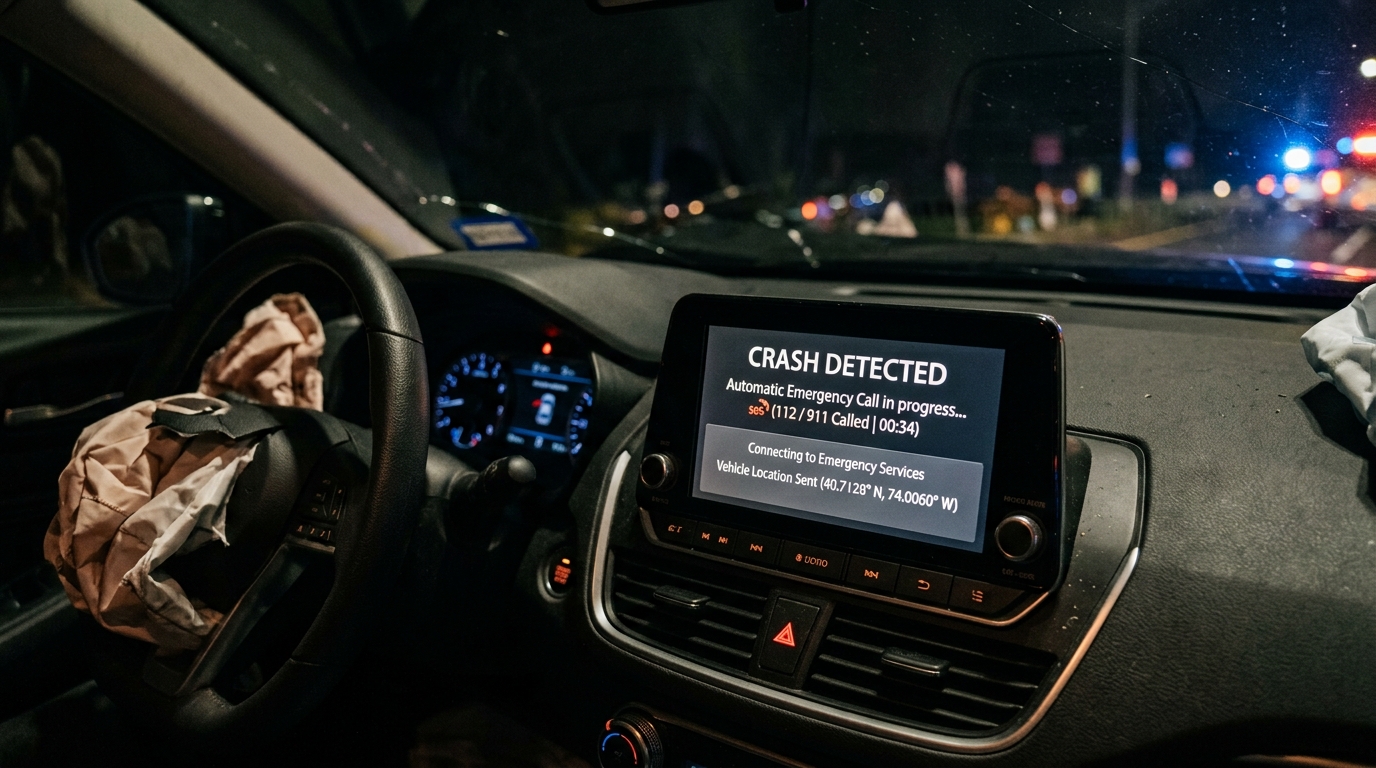
Crash location is one of the most practical pieces of emergency information. If responders know exactly where to go, they can reduce time spent searching. This is especially important on rural roads, highways, mountain routes, dark corridors, and low-traffic areas where a crashed vehicle may not be seen immediately.
Accident Wiki already covers rural roadway departure crashes in 2026, and automatic crash notification connects directly with that issue. When a vehicle leaves the roadway in a remote area, the crash may not block traffic or attract immediate witnesses. A notification system can help reduce the delay between impact and discovery.
Remote crashes can stay hidden longer
Not every serious crash happens at a busy intersection. Some happen on quiet roads, after midnight, in bad weather, or beyond the view of passing traffic. A vehicle can leave the lane, strike a tree, roll down an embankment, or stop behind barriers where it is not immediately visible.
In those situations, the danger is not only the crash itself. The danger is delayed discovery. If no one calls for help, injured people may wait longer for medical care. Automatic crash notification cannot treat injuries, but it can help start the response sooner.
Crash details can help responders prepare
When emergency teams know more about a crash before arriving, they may be better prepared. A rollover, multi-impact collision, or high-severity crash may require different resources than a minor parking-lot impact. Dispatchers may need police, fire, EMS, tow services, or specialized rescue support depending on the situation.
Better information does not guarantee a perfect response, but it can improve decision-making. The more accurately a system can describe the event, the easier it may be for responders to send the right help to the right place.
How ACN fits into modern road safety
Road safety has traditionally focused on preventing crashes through driver behavior, enforcement, vehicle design, and infrastructure. Those efforts remain essential. Speed management, seat belt use, sober driving, distraction prevention, safer crossings, and better road design all reduce crash risk.
However, a complete safety strategy also includes post-crash care. Even with strong prevention systems, crashes will still happen. When they do, survival may depend on fast discovery, accurate triage, emergency transport, trauma care, and communication between dispatchers and responders.
Automatic crash notification fits into that larger system. It connects the vehicle to emergency response more quickly than a human call may be able to do in certain situations. It also supports a broader shift toward connected safety data, where vehicles, dispatch systems, and responders can share information faster.
This topic also relates to AI near-miss detection in 2026. Near-miss tools focus on warning signs before a crash. Automatic crash notification focuses on what happens after impact. Together, they show how safety technology is moving in two directions: prevention before impact and response after impact.
Post-crash care is part of prevention too
Post-crash care may sound separate from accident prevention, but it belongs in the same safety conversation. Preventing deaths and severe injury does not end when vehicles collide. It continues through fast notification, safe scene management, emergency medical treatment, and transport to appropriate care.
Communities that only focus on avoiding crashes may miss part of the problem. A safer system should also ask what happens when prevention fails. Can people call for help? Can dispatchers find them? Can responders reach them quickly? Can serious injuries be identified early?
Benefits and Limits of Automatic Crash Notification
The biggest benefit of automatic crash notification is faster awareness. A crash that might otherwise go unreported for several minutes or longer can trigger a response sooner. This is most valuable when occupants cannot call, when the location is hard to describe, or when no witnesses are nearby.
Another benefit is reduced uncertainty. A crash notification can provide location data and sometimes crash severity indicators. That information may help 911 centers and responders prioritize resources. It may also help emergency services distinguish between a minor incident and a crash that needs urgent medical attention.
Still, ACN has limits. A system may fail if the vehicle loses power, cellular service is unavailable, sensors do not trigger, or the connected service is not active. Some systems may depend on subscriptions, hardware age, software updates, or network coverage. Drivers should not assume every vehicle has the same level of emergency connectivity.
What drivers and policymakers should understand
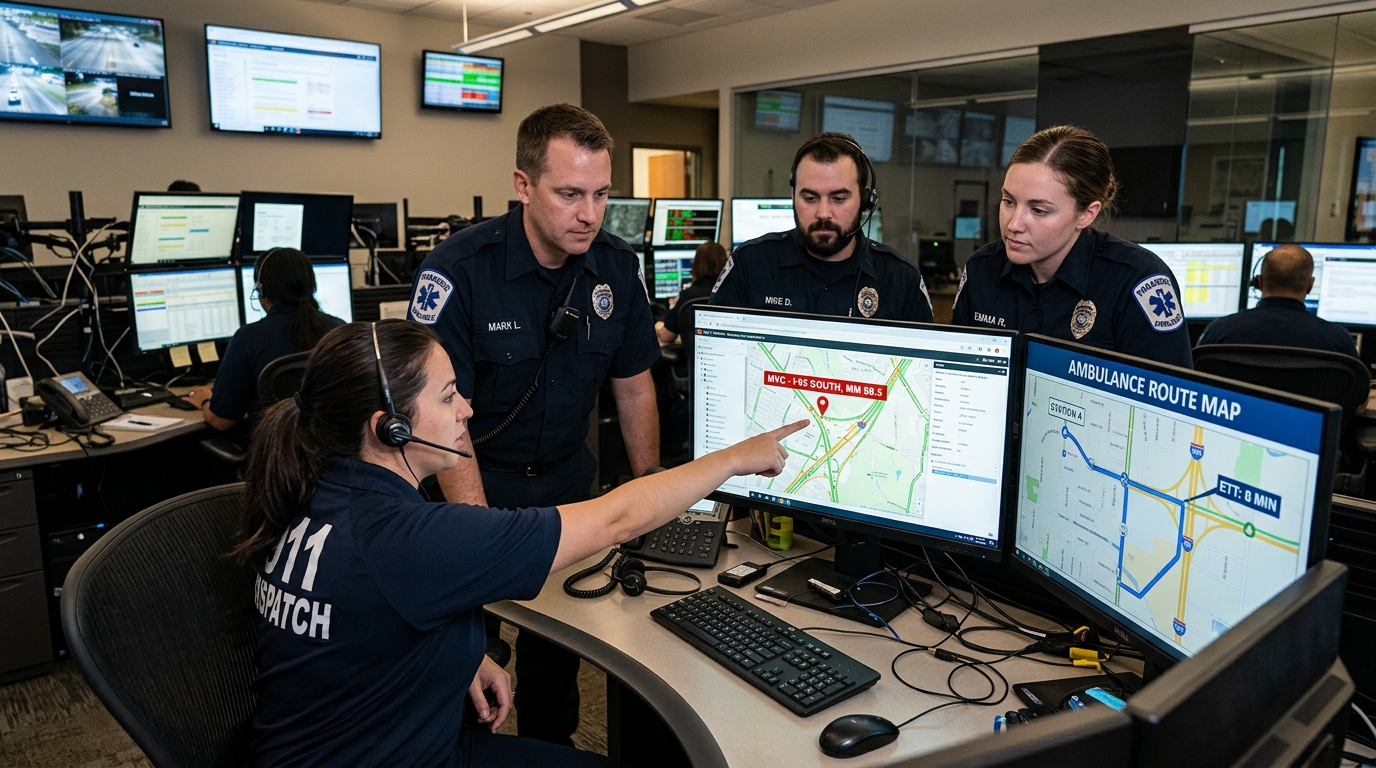
Drivers should know whether their vehicle has automatic crash notification, how it works, and whether any subscription or connected service is required. They should also keep emergency contact information updated where possible. If the system includes an emergency button, drivers should know where it is and how to use it.
Policymakers and safety agencies should think about ACN as part of a larger emergency response network. The value of crash notification depends on whether the information reaches the right people quickly and whether responders can act on it. Data standards, dispatch training, privacy rules, cellular coverage, and rural response capacity all matter.
Privacy also deserves attention. Crash systems may collect location and vehicle event data. Safety programs should be clear about what information is shared, when it is shared, who receives it, how long it is stored, and how it is protected. Emergency technology should save time without creating unnecessary data misuse concerns.
For official background, NHTSA explains automatic crash notification as part of driver assistance technologies here: NHTSA Driver Assistance Technologies.
Automatic crash notification also connects with crash types already covered on Accident Wiki. A fatigued driver may drift off the road late at night, as discussed in drowsy driving accidents in 2026. A wrong-way crash may create severe head-on impact within seconds, as covered in wrong-way driving detection in 2026. In both situations, fast emergency notification can matter after prevention fails.
Final rule: technology should shorten the gap between crash and care
The simplest way to understand ACN is this: it should shorten the gap between collision and care. It cannot undo the crash. It cannot replace emergency workers. It cannot guarantee survival. But it can help reduce silence after impact, especially when injured people cannot call for help themselves.
Final Thoughts: Automatic crash notification in 2026 deserves more attention because crash survival is not only about preventing impact. It is also about what happens in the minutes after impact. A vehicle that can detect a serious crash, share location, and connect to emergency response may help injured occupants receive help sooner. The next step is making sure these systems are reliable, understandable, privacy-conscious, and integrated into real emergency response workflows. Safer roads need prevention before the crash and faster care after the crash.