
Wrong-Way Driving Detection in 2026: Why High-Risk Roads Need Faster Alerts
Wrong-way driving detection is becoming a bigger road safety topic in 2026 because wrong-way crashes are often sudden, violent, and difficult for innocent drivers to avoid. A vehicle traveling against traffic on a freeway, divided highway, ramp, or one-way urban corridor can create a high-speed head-on crash within seconds. Even when these incidents happen less often than other crash types, the consequences can be severe.
Wrong-way driving usually does not give other motorists much time to react. A driver may enter an exit ramp by mistake, turn into the wrong lane, drive impaired, misread signs, or continue in the wrong direction before realizing the danger. At night, in bad weather, or near confusing interchanges, the risk becomes worse. That is why faster detection, clearer warnings, and quicker emergency response matter.
The issue fits Accident Wiki because the site already covers accident-prone areas, vulnerable road users, road safety policy, and traffic risk patterns. Your article on traffic deaths, blackspots, and vulnerable road users explains why broad safety progress can still leave dangerous locations exposed. Wrong-way driving is another example of a predictable danger that needs targeted prevention, not just public awareness.
A good road safety system should not wait until a wrong-way driver causes a fatal crash. It should detect the movement early, warn the wrong-way driver, alert oncoming traffic, notify traffic operators, and help law enforcement respond before impact. That is the real value of wrong-way driving detection in 2026.
Why Wrong-Way Driving Crashes Are So Dangerous
Wrong-way crashes are dangerous because they often happen on roads designed for higher speeds. When two vehicles approach each other from opposite directions in the same lane, the closing speed can be extreme. A crash that might be survivable at lower speeds can become fatal when both vehicles are moving fast.
These crashes also create confusion. Drivers traveling correctly may see headlights coming toward them and hesitate for a split second because the situation feels impossible. That delay can matter. At freeway speeds, a few seconds can decide whether someone has enough room to brake, change lanes, or avoid impact.
Why wrong-way crashes often happen at night
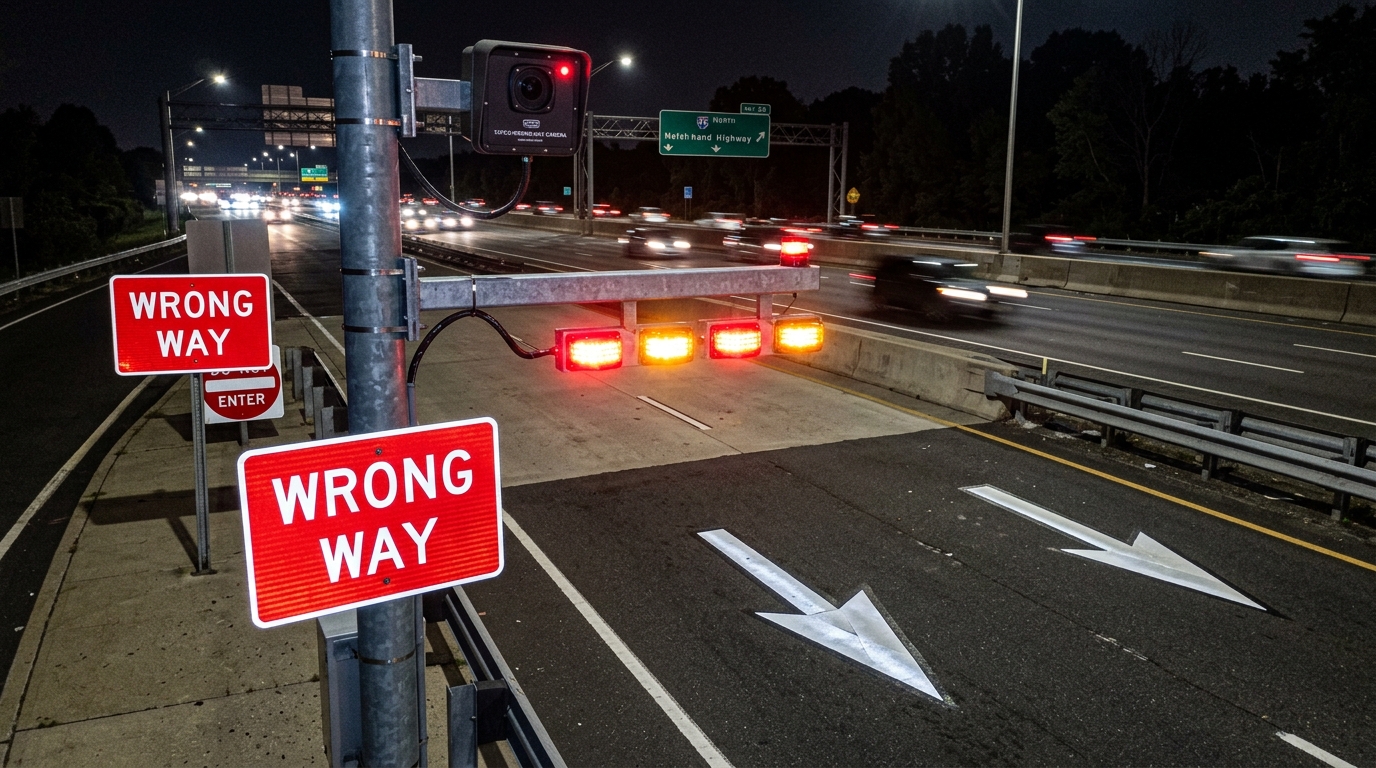
Many wrong-way incidents happen during nighttime or low-visibility conditions. Darkness makes signs harder to read, reduces driver awareness, and can make complex ramps more confusing. Impairment also becomes a bigger factor during late-night and early-morning hours.
This is why lighting, reflective signs, pavement arrows, ramp geometry, and alert systems matter. A driver who is confused needs obvious visual cues before entering the wrong direction. Once the vehicle is already moving against traffic, the system needs to react quickly.
Impairment and confusion can overlap
Wrong-way crashes are often linked with alcohol or drug impairment, but impairment is not the only cause. Older drivers, inexperienced drivers, tourists, tired drivers, and people unfamiliar with an area may also make dangerous navigation mistakes. Poor signage, faded markings, confusing road design, and bad lighting can make those mistakes more likely.
That is why prevention should not focus only on punishment after the crash. Better prevention looks at the driver, the road, the ramp, the signs, the lighting, the detection system, and emergency response timing.
Why ordinary warning signs may not be enough
Traditional “Wrong Way” and “Do Not Enter” signs help, but they depend on the driver noticing, understanding, and reacting in time. A sober and alert driver may correct quickly. An impaired or confused driver may continue forward despite the signs.
Modern wrong-way driving detection adds another layer. Cameras, radar, infrared sensors, traffic signal integration, flashing signs, dynamic message boards, and operations center alerts can help identify the problem and push warnings faster. This makes the system more active instead of relying only on static signs.
Technology must connect to real response
Detection alone is not enough. If a system detects a wrong-way vehicle but nobody responds quickly, the risk remains. The strongest programs connect detection to multiple actions: flashing alerts for the wrong-way driver, warnings for nearby motorists, CCTV confirmation, traffic management center notification, and law enforcement dispatch.
This is where road safety technology becomes practical. The goal is not to install gadgets for appearance. The goal is to shorten the time between wrong-way entry and intervention.
How Wrong-Way Driving Detection Can Improve Road Safety
A strong wrong-way driving detection strategy works best when it targets high-risk locations first. Not every ramp or one-way road has the same level of danger. Agencies should study crash records, near-miss reports, roadway layout, lighting, driver behavior, and local complaints to identify where the risk is highest.
For official safety background, the National Transportation Safety Board explains that wrong-way driving investigations focus on driver impairment, traffic control devices, highway design, monitoring and intervention programs, and in-vehicle support systems. Readers can review the NTSB page here: NTSB Wrong-Way Driving Safety Research Report.
High-risk ramps and corridors should come first
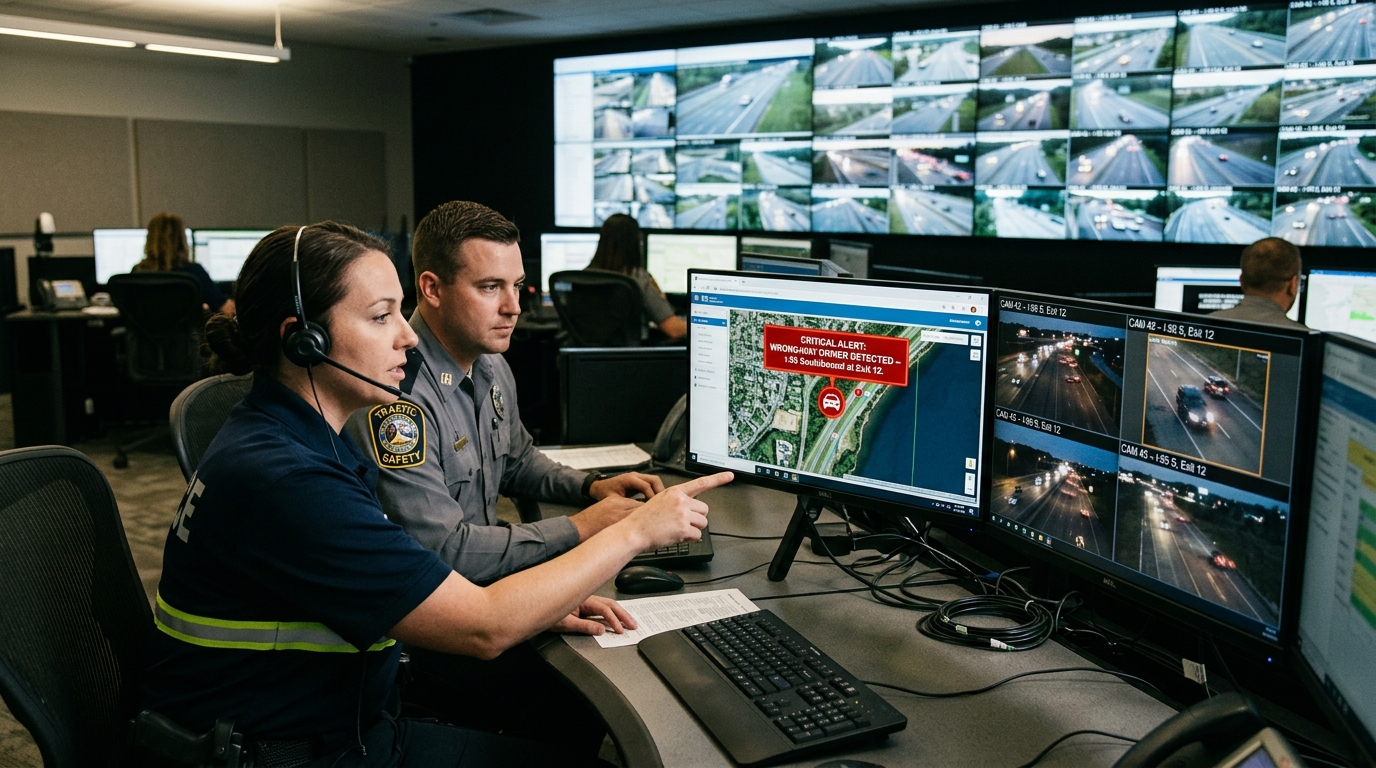
Wrong-way prevention should begin at known trouble points. These may include freeway exit ramps near bars or entertainment districts, interchanges with confusing geometry, poorly lit ramps, one-way urban streets, split intersections, and locations with repeated wrong-way reports.
Accident Wiki’s post on vehicle blind zones and pedestrian safety makes a similar point about visibility. When the road environment hides danger or creates confusion, the crash risk rises. Wrong-way driving prevention also depends on making the correct direction obvious before the mistake becomes deadly.
Data should include near misses, not only deaths
If agencies only react to fatal crashes, they will always be late. Near misses, 911 calls, detection alerts, wrong-way turnarounds, and driver complaints can reveal dangerous locations before tragedy happens. A ramp that repeatedly confuses drivers should not need multiple deaths before action begins.
This is also where blackspot thinking matters. A location with repeated wrong-way activity is giving a warning. Good road safety policy treats that warning as evidence and acts before another headline appears.
Better design still matters more than technology alone
Technology works best when paired with clear design. Larger wrong-way signs, lower-mounted signs, red reflective markers, pavement arrows, better lighting, improved ramp geometry, clearer lane separation, and better signal timing can all reduce confusion. Detection systems should support those upgrades, not replace them.
For vulnerable road users, the same lesson applies. Accident Wiki’s guide on vulnerable road user safety in 2026 explains that safer systems should assume people make mistakes. Wrong-way prevention follows that same logic. Roads should make dangerous mistakes harder to make and faster to correct.
Drivers also have a role. If you see a wrong-way driver, slow down carefully, move away if possible, avoid sudden swerving, and call emergency services when safe. Give the location, direction of travel, vehicle description, and any identifying details. Do not try to stop the vehicle yourself.
Wrong-way driving detection deserves more attention in 2026 because it addresses one of the scariest crash scenarios on high-speed roads. These incidents may be less common than distracted driving, speeding, or ordinary intersection crashes, but their severity makes them impossible to ignore.
The best approach is layered: better signs, clearer ramp design, improved lighting, smart detection systems, traffic operations alerts, fast law enforcement response, and better use of near-miss data. If agencies already know where wrong-way entries happen, delay is not neutral. It leaves drivers exposed to a risk that the system has already identified.
For Accident Wiki, this topic strengthens the site’s road safety policy coverage because it connects technology, infrastructure, emergency response, accident-prone locations, and prevention. Wrong-way crashes are not random surprises when the warning signs are already visible. In 2026, the smarter question is whether road systems can detect the danger fast enough to stop the crash before it happens.