
Carspreading in 2026: Why Bigger Vehicles Are Becoming a Bigger Urban Accident Risk
Carspreading in 2026 is becoming a serious road safety issue because passenger vehicles are getting larger, taller, wider, and heavier. The trend is especially visible in cities where large SUVs, pickup trucks, crossovers, delivery vehicles, and oversized family vehicles share limited space with pedestrians, cyclists, scooter riders, buses, and compact cars. Bigger vehicles may feel safer to the people inside them, but they can create greater danger for people outside them.
The problem is not only vehicle weight. Height matters. Hood shape matters. Front-end design matters. Driver visibility matters. Street width matters. When a taller vehicle strikes a pedestrian, the impact often hits higher on the body. Instead of rolling onto the hood, a person may be pushed forward or knocked down. That can increase the risk of severe head, chest, and torso injuries.
Carspreading also changes how cities work. Larger vehicles take up more curb space, narrow visibility at crossings, crowd bike lanes, block sightlines near intersections, and make already tight streets feel more dangerous. Accident prevention in 2026 cannot focus only on driver behavior. It also has to examine the size and shape of the vehicles moving through public space.
Why Bigger Vehicles Create a Different Kind of Crash Risk
Many drivers choose larger vehicles because they want comfort, cargo room, high seating position, and a feeling of protection. From inside the vehicle, that choice may feel practical. From outside the vehicle, the safety picture can look very different. A tall hood can hide a child, cyclist, scooter rider, or pedestrian standing directly in front of the vehicle. A wider body can make lane positioning harder. A heavier vehicle can create more crash energy when impact occurs.
This is why vehicle size has become part of the road safety conversation. Older safety debates often focused on seatbelts, airbags, drunk driving, speed limits, and distracted driving. Those issues still matter. But a modern urban crash can also involve design choices built into the vehicle itself. When the front end is high and blunt, pedestrians and cyclists face a different injury pattern than they would with a lower, sloped car.
For Accident Wiki readers, this topic connects directly with existing coverage on vehicle blind zones and pedestrian safety. Blind zones are not only a driver problem. They are also a design problem. If a driver cannot see a person close to the vehicle, the chance of preventing a low-speed crash drops.
Vehicle height changes crash outcomes
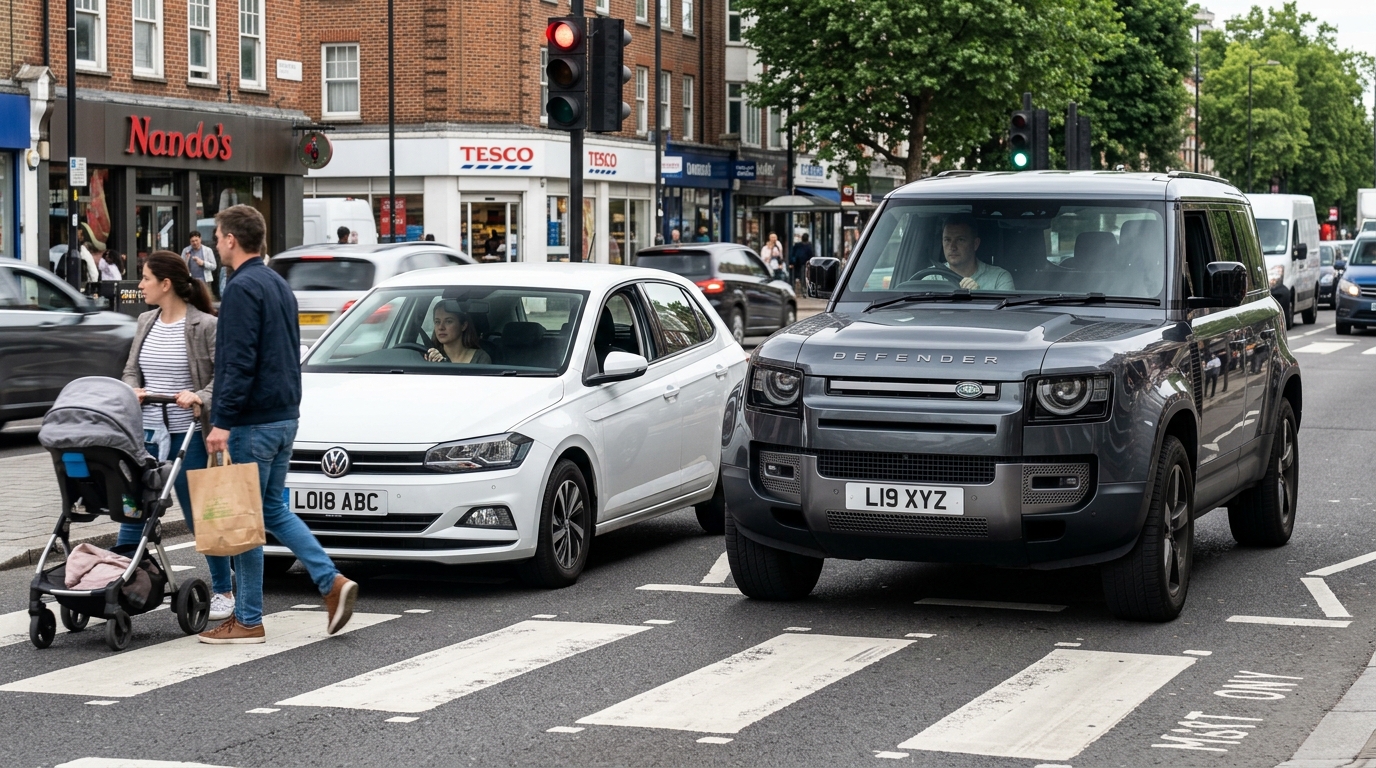
When a vehicle strikes a pedestrian, speed is a major factor. Higher speed increases the chance of severe injury or death. However, vehicle height changes what that speed does to the human body. A lower vehicle may strike a person around the legs. A taller vehicle may strike higher, closer to the pelvis, chest, or head. That difference can make lower-speed crashes more dangerous than many drivers expect.
This matters in city traffic because many pedestrian crashes do not happen at highway speeds. They happen during turns, parking movements, school drop-offs, driveway exits, crosswalk conflicts, and stop-and-go traffic. If a taller vehicle causes more serious injury at a lower speed, then “I was not going fast” is not enough to call the situation safe.
Taller front ends increase danger at lower speeds
A taller front end can reduce the margin for error. The driver may have less direct visibility close to the front bumper, and the pedestrian may face a more severe impact point. This is especially concerning for children, older adults, wheelchair users, and people crossing in crowded urban areas.
Speed management still matters. Lower speeds give drivers, pedestrians, and vehicle safety systems more time to react. That is why this issue also connects with speed safety cameras in 2026. A large vehicle moving slowly is still not harmless, but a large vehicle moving too fast is much worse.
Blind zones make prevention harder
Blind zones are areas around a vehicle that the driver cannot easily see. Bigger vehicles can create larger front and side blind zones, especially when the driver sits high and the hood stretches forward. This creates risk in parking lots, school zones, crosswalks, driveways, and tight intersections.
Technology can help, but it is not a complete solution. Cameras, sensors, pedestrian AEB, and parking alerts can reduce some risk. However, dirty sensors, poor lighting, glare, rain, blocked cameras, or driver overconfidence can weaken those systems. Accident prevention should not depend on one screen or one warning chime.
Urban space problems make the risk worse
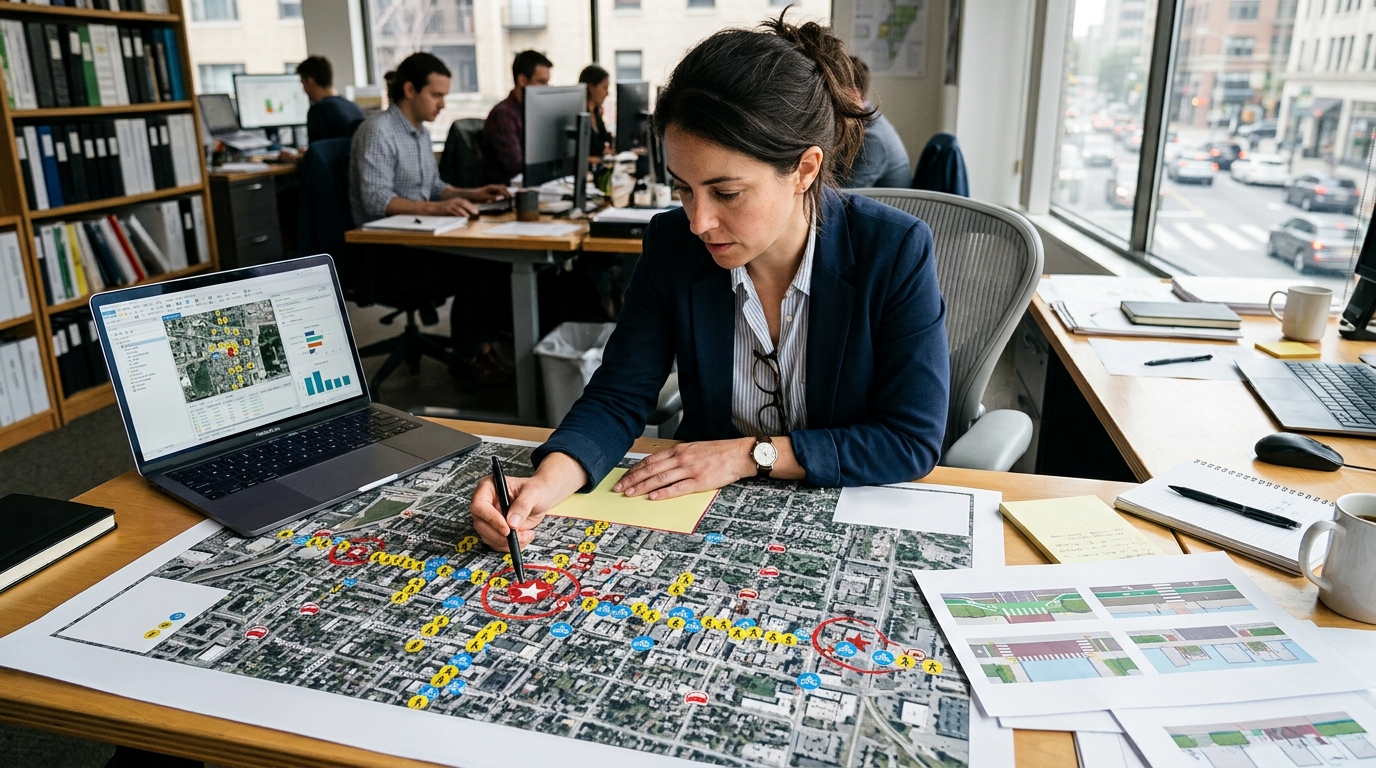
Carspreading is also an infrastructure problem. Cities were not designed with unlimited street width, curb space, parking space, and crossing distance. When vehicles keep getting bigger, the same streets become more crowded. Larger vehicles can block views at intersections, make parking spaces feel tighter, reduce visibility for smaller drivers, and make it harder for cyclists and pedestrians to judge movement.
At intersections, parked large vehicles can hide people waiting to cross. Near schools, taller vehicles in pickup lines can block children from view. On narrow streets, wider vehicles can push cyclists closer to traffic. In parking lots, a large SUV reversing beside smaller vehicles can create visibility problems that backup cameras do not fully solve.
This is why urban safety planning needs more than crash counts. Cities should study near misses, sightlines, vehicle mix, curb activity, pedestrian volume, school access, and the way larger vehicles interact with street design. Accident Wiki’s guide on traffic deaths, blackspots, and vulnerable road users supports the same idea: safety depends on identifying where risk concentrates before another severe crash occurs.
Larger vehicles can crowd out safer street design
Bigger vehicles require more room to park, turn, load, and maneuver. That can make it harder for cities to create protected bike lanes, curb extensions, wider sidewalks, bus priority lanes, and safer crossings. When street design bends around oversized vehicles, vulnerable road users may lose space.
The safest urban design does not treat vehicle size as fixed and everyone else as flexible. It asks whether the road environment should encourage smaller, safer, more visible, and better-controlled vehicles in dense areas. That question is becoming more important as cities try to reduce serious injuries while also managing congestion, deliveries, and curb demand.
What Cities, Drivers, and Safety Planners Should Do Next
Carspreading is not a problem one driver can solve alone. It requires layered prevention. Drivers need to understand the limits of large vehicles. Automakers need to treat pedestrian safety as a design priority. Cities need to manage curb space, speeds, and visibility. Policymakers need to decide whether bigger vehicles should carry stronger safety requirements in dense urban areas.
Drivers of large vehicles should slow down near crosswalks, schools, parking lots, driveways, transit stops, and busy intersections. They should leave more space, check blind zones carefully, keep sensors and cameras clean, and avoid assuming that height gives them a better view of everything. A higher seat can help with long-distance visibility while making close-in visibility worse.
Vehicle technology should also be part of the answer. Pedestrian AEB systems, front cameras, surround-view cameras, and improved sensor design can reduce some danger. But technology works best when paired with safer speeds and better street design. Accident Wiki’s article on pedestrian AEB systems in 2026 explains why automatic braking should be treated as one layer of prevention, not a replacement for safe roads.
Safer policy starts with measuring the right risks
Communities should collect better data on the relationship between vehicle size and crash severity. Crash reports often record vehicle type, but local safety planning should go further. Agencies should look at hood height, vehicle weight, blind-zone concerns, parking conflicts, curb visibility, and crash locations involving children, pedestrians, cyclists, and scooter riders.
Road agencies should also study places where large vehicles repeatedly create near misses, not only places where crashes already happened. A school driveway with repeated close calls is a warning. A crosswalk blocked by parked SUVs is a warning. A bike lane squeezed by wide vehicles is a warning. Waiting for deaths before acting is poor safety planning.
For an external safety reference, readers can review the Insurance Institute for Highway Safety research here: Vehicle height compounds dangers of speed for pedestrians.
Right-sizing starts with data, design, and public awareness
The final lesson is not that every larger vehicle is automatically unsafe in every situation. The real lesson is that size changes risk, especially in cities. A bigger vehicle needs more careful design, slower operation, better visibility, and stronger accountability around vulnerable road users.
Final Thoughts: Carspreading in 2026 is more than a parking inconvenience or design trend. Larger, taller vehicles can increase blind zones, worsen pedestrian crash outcomes, crowd limited street space, and make urban safety planning harder. Cities should respond with better speed management, safer crossings, clearer sightlines, stronger data, and vehicle design standards that protect people outside the car. A safer road system cannot only protect occupants. It must also protect the people walking, cycling, rolling, and working around every vehicle.