
Why Vehicle Blind Zones Are Becoming a Bigger Urban Accident Risk in 2026
Urban accident discussions often focus on speeding, distracted driving, poor enforcement, and dangerous intersections. Those issues still matter. But in 2026, another road safety problem is getting more attention because it sits right in the middle of vehicle design, pedestrian safety, and city traffic patterns: vehicle blind zones. This is especially important in urban areas where drivers, pedestrians, cyclists, scooter riders, and turning vehicles meet in the same tight spaces every day.
Blind zones are not a new problem. What is changing is how much they matter in modern traffic. Many roads now carry more vulnerable road users than they did a decade ago. At the same time, larger vehicles with taller front ends, thicker pillars, and more obstructed sightlines have become common in many markets. That combination creates a safety issue that is easy to underestimate until a left turn, crosswalk entry, or low-speed urban maneuver goes wrong.
That is why this topic fits Accident Wiki so well. Your site already covers vulnerable road user safety, blackspots and concentrated risk, and city-level road safety responses. A post about vehicle blind zones adds a strong missing layer to that discussion because it explains why some crashes happen even when the road user did nothing reckless. Sometimes the problem is not only speed or behavior. Sometimes the driver simply cannot see enough, soon enough, in the place where the conflict happens.
Why This Risk Is Getting More Attention in 2026
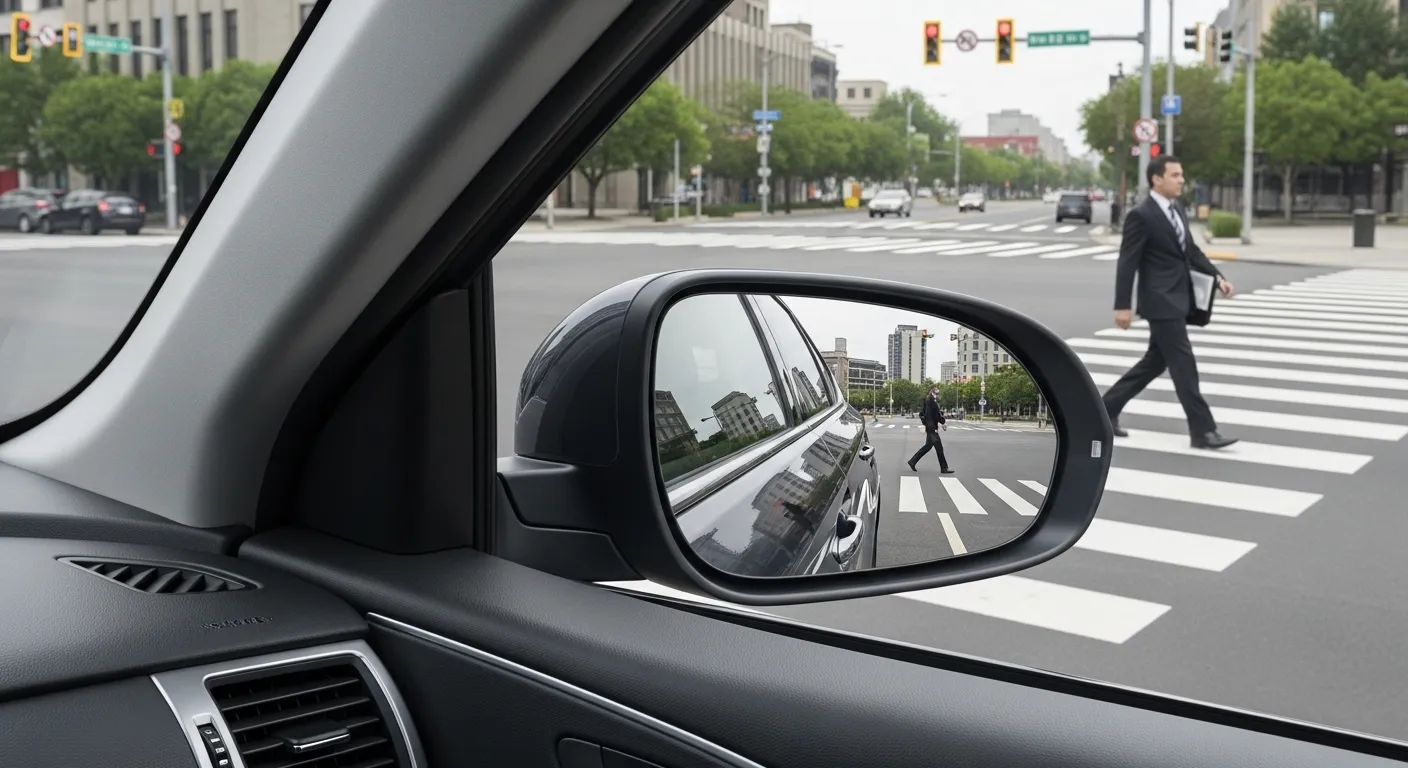
Vehicle blind zones are becoming a bigger urban accident issue because they affect the exact places where cities are trying to make mobility safer: crosswalks, turns, school zones, mixed-use streets, and intersections with heavy foot traffic. These are the same spaces where pedestrians and cyclists are most exposed and where a driver’s incomplete view can turn an ordinary maneuver into a severe crash.
Larger Vehicles and Lower Visibility Are Colliding With Urban Reality
Urban roads are not only carrying more cars. They are carrying more kinds of movement at the same time. Pedestrians are walking to transit, cyclists are sharing corridors, delivery riders are moving quickly, and drivers are making repeated turning decisions in traffic. That means visibility has become a bigger part of road safety than many people realize. A vehicle can have modern safety branding and still create real risk if the design blocks critical sightlines during the moments that matter most.
Turning conflicts are where the danger spikes
One of the most dangerous urban moments is the left turn through a crosswalk. Drivers often divide their attention between oncoming vehicles, signal timing, lane position, and the turn itself. If the vehicle also has a significant blind zone caused by the A-pillar, side mirror placement, hood height, or front-end geometry, a pedestrian can disappear from view at exactly the wrong time. That is why blind-zone discussions are not just about parking-lot convenience. They are about real crash exposure in everyday city driving.
This also helps explain why vulnerable road user safety remains such a strong topic in 2026. People outside the vehicle do not have the protection of a car body, airbags, or a steel frame around them. When visibility fails during a turn or crossing conflict, the person in the crosswalk usually absorbs the direct force of impact. That is one reason Accident Wiki’s post on vulnerable road user safety connects naturally to this subject.
Blind zones and blackspots make each other worse
Blind zones become even more dangerous when they combine with bad street design. A poorly lit intersection, an overwide crossing, faded lane markings, weak pedestrian priority, or chaotic turning behavior can already turn a location into a repeat-risk corridor. Add a vehicle with weak forward visibility, and the margin for error gets even smaller. That is why this is not only a vehicle design issue. It is also an urban traffic safety issue.
You can see that pattern in your existing coverage of Gurgaon blackspots and your broader post on why blackspots still define road safety in 2026. A dangerous road location is rarely dangerous for only one reason. The real problem usually comes from overlap: speed, visibility, turning conflict, poor design, and inconsistent driver behavior all stacking on top of each other.
Safety Technology Is Improving, but It Cannot Cover Every Mistake
Some readers will assume that modern safety technology solves this problem. It helps, but that view is too simplistic. Advanced driver assistance systems can reduce some crash risk, and pedestrian automatic emergency braking is an important step forward. But no safety system fully replaces clear visibility, safer street design, and better driver behavior. Technology works best when the rest of the safety system is already doing its job.
Pedestrian AEB helps, but visibility still matters first
Pedestrian detection and automatic braking matter because they add a second layer of protection when a driver reacts too late or fails to notice someone in time. That is a real improvement, not marketing fluff. Still, the best outcome is prevention before the emergency system has to intervene. A safer vehicle is one that gives the driver a clearer view in the first place and works within a street environment that makes pedestrians easier to see and harder to hit.
For readers who want more technical context, a relevant external reference is the IIHS analysis of driver-side blind zones and left-turn pedestrian crashes. It pairs well with broader discussions about newer crash-avoidance systems and why safer vehicle design should not stop at what happens after impact.
What Cities, Fleets, and Drivers Should Do in 2026
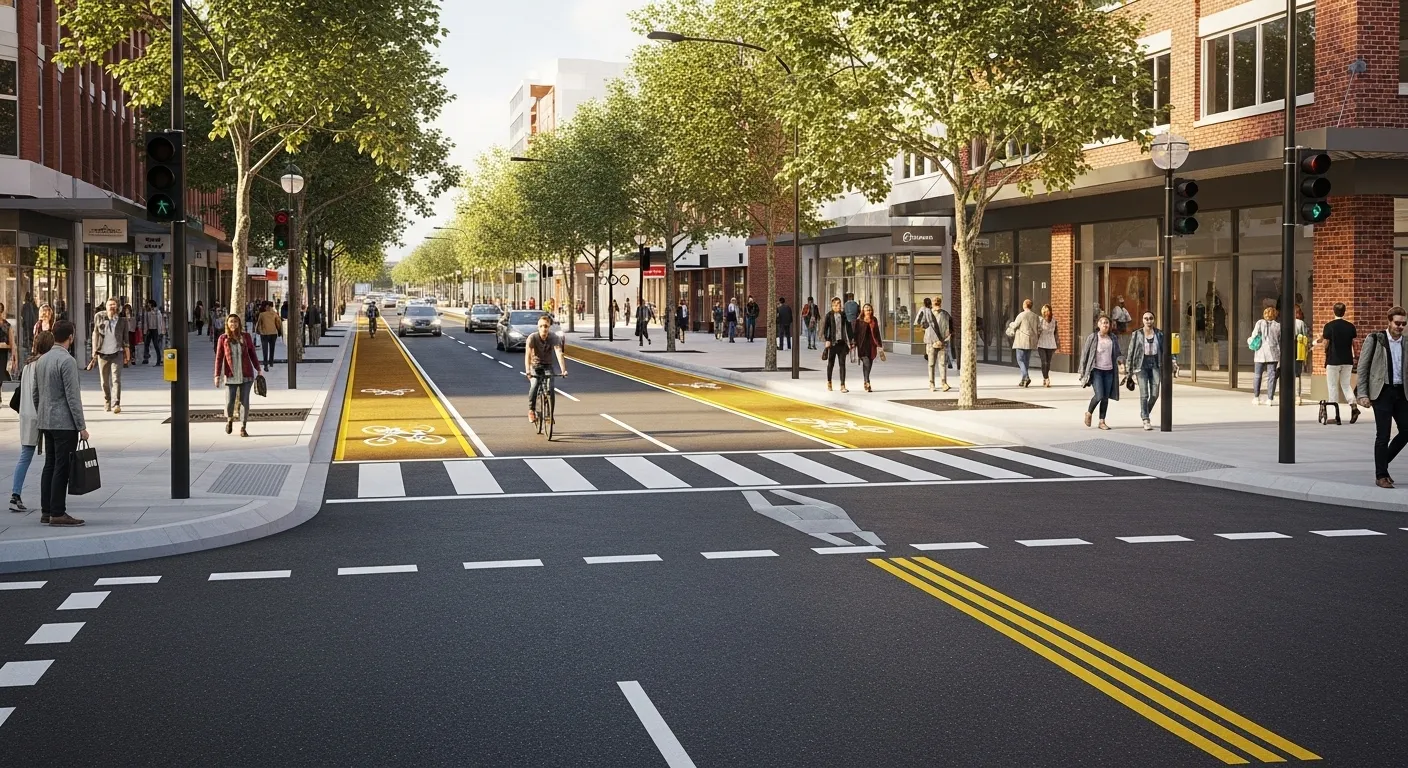
If vehicle blind zones are becoming a bigger accident trend, the solution cannot depend on one fix alone. It has to be layered. Better street design, better vehicle visibility, better crash-avoidance systems, better driver behavior, and better policy all matter. The strongest prevention strategy is the one that assumes people will miss things sometimes and builds a safer environment around that reality.
Better Prevention Starts Before the Crash
The road safety conversation gets weaker when it treats every pedestrian crash as a random human error. In many cases, the risk was predictable before the collision happened. Cities knew the intersection was difficult. Designers knew the crossing was too long. Operators knew the route had repeated turning conflicts. Drivers knew visibility was limited. That is why serious prevention must start earlier.
What policymakers should prioritize now
- Audit high-risk intersections for turning visibility, not only vehicle speed.
- Use curb extensions, daylighting, improved signal timing, and shorter crossings where conflict is highest.
- Pair blackspot analysis with pedestrian and cyclist exposure data.
- Encourage safer front-end design and stronger crash-avoidance standards in vehicle assessment programs.
- Focus enforcement where failure to yield and turning conflicts are common.
This is where posts like Delhi’s road safety roadmap still matter. Better policy is not just about reacting after a headline. It is about identifying repeat-risk conditions and acting before the next fatality forces attention back to the same place.
What drivers and fleet operators should change
- Slow down earlier before turning through crosswalks and side streets.
- Clear the full crosswalk visually instead of scanning only for other vehicles.
- Train commercial and delivery drivers on blind-zone risk in dense urban routes.
- Use camera systems and route planning to reduce avoidable visibility conflicts.
- Support speed management on high-risk routes, especially for larger vehicles.
Fleet operators, bus companies, and commercial services should treat blind zones as an operational risk, not just a design feature. That is also why topics like speed governors after the Ladhowal crash still connect to the bigger prevention picture. Speed, visibility, and reaction time are tied together. When one layer fails, the others matter more.
Vehicle blind zones are becoming a bigger urban accident risk in 2026 because they expose a hard truth about safety: a crash can be highly predictable long before it happens. If the road encourages conflict, the crossing gives poor visibility, the vehicle hides part of the scene, and the turn is made too quickly, the danger is not random. It is built into the system.
For Accident Wiki, this topic has strong SEO value because it sits right between road safety policy, urban traffic safety, and vulnerable road user prevention. It also gives you a durable internal linking hub for future posts about pedestrian crashes, intersection design, driver assistance systems, fleet safety, school zones, and blackspot reform. That makes it timely, practical, and easy to build on.