
AI Near-Miss Detection in 2026: How Predictive Safety Tools Can Prevent Crashes Before Impact
AI near-miss detection is becoming one of the most important road safety topics in 2026 because it changes how communities think about accident prevention. Traditional safety planning often waits for crashes, injuries, and deaths before officials identify a dangerous location. That approach can reveal serious patterns, but it reacts after people already suffered harm. Predictive tools aim to spot risk earlier.
A near miss happens when road users come dangerously close to a collision but avoid impact at the last moment. A driver brakes hard before hitting a pedestrian. A cyclist swerves away from a turning vehicle. A scooter rider narrowly avoids a car door. A truck nearly sideswipes a smaller vehicle during a lane change. No crash report may exist, but the danger was real.
In 2026, cameras, sensors, fleet dashcams, traffic analytics, and artificial intelligence can help identify these close calls. The goal is not to replace human judgment. The goal is to give safety planners better evidence before a location becomes known only through injuries and fatalities. When used carefully, AI near-miss detection can help cities, transportation agencies, employers, and drivers understand where crash risk is building.
This topic fits closely with accident-prone areas, vehicle blind zones, vulnerable road users, speed safety cameras, and wrong-way driving detection. All of these issues share one core idea: serious accidents rarely come from nowhere. Warning signs often appear first.
Why AI Near-Miss Detection Matters for Modern Accident Prevention
Road safety has always depended on data. Police reports, hospital records, insurance claims, traffic studies, and community complaints all help identify risk. However, crash data has a major limitation. It usually arrives after the damage has already happened.
Near-miss data gives safety teams another layer of information. It can show where people almost collide, where drivers brake suddenly, where pedestrians hesitate, where cyclists face dangerous turning conflicts, and where traffic design creates repeated close calls. That information can support faster, smarter prevention.
Near misses can reveal hidden crash patterns
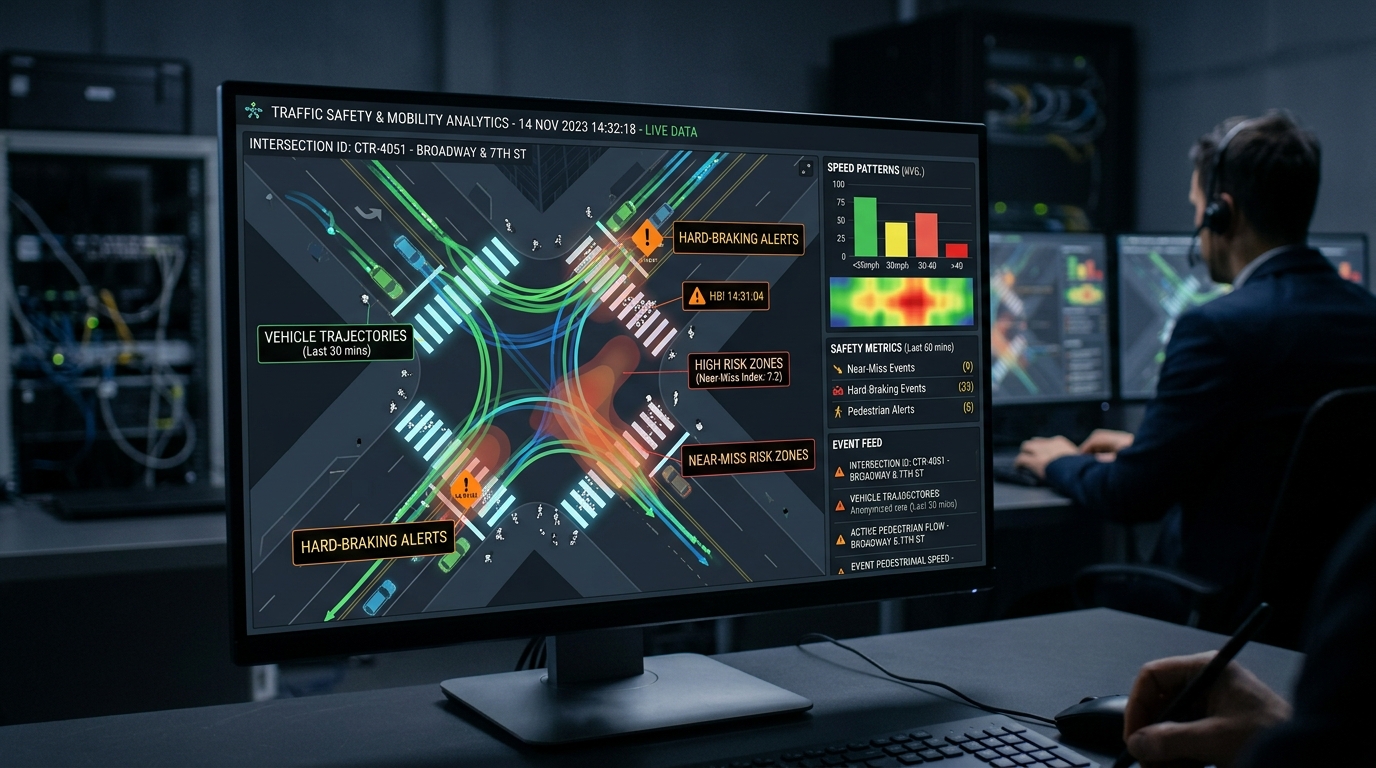
A dangerous intersection may not record many reported crashes in a single year. That does not always mean it is safe. Drivers may slam on the brakes every morning. Pedestrians may avoid the crosswalk because vehicles fail to yield. Cyclists may move onto the sidewalk because turning traffic feels unsafe. These patterns may stay invisible if officials only count actual collisions.
AI tools can review video, movement paths, braking behavior, vehicle speed, and road user conflicts. The system can flag repeated risk points, such as a left-turn conflict, a fast approach to a crosswalk, or a merge area where vehicles nearly collide. Safety teams can then compare the data with field observations and local crash history.
Why close calls should not be ignored
Close calls matter because they show where the safety margin is already too thin. A location with frequent hard braking or repeated pedestrian conflicts may only need one distracted driver, one rainy day, or one poorly timed turn to become a serious crash scene.
When communities wait for injuries before taking action, they accept unnecessary risk. Near-miss analysis supports a more proactive mindset. It helps planners ask better questions. Why are drivers braking hard here? Why do cyclists avoid this lane? Why do pedestrians hesitate before crossing? Why do vehicles enter the intersection too fast?
Predictive tools can support accident-prone area planning
Accident-prone areas, also called blackspots, usually involve places with higher-than-average crash risk. Traditional blackspot analysis often depends on reported crash totals. AI near-miss data can add another layer by showing risky movement before crashes become frequent.
This does not mean cities should abandon crash records. Instead, they should combine crash history, near-miss data, speed patterns, road design, lighting, signage, traffic volume, and public complaints. A stronger evidence mix can help decision-makers prioritize locations that need redesign, enforcement, signal changes, protected crossings, better signage, or lower speeds.
How AI systems detect near-miss events
AI near-miss systems can use cameras, sensors, connected vehicle data, dashcams, and traffic monitoring tools. The software tracks movement and looks for risk signals. These signals may include sudden braking, sharp swerving, unsafe speed, short time-to-collision, close passing, lane drift, or conflict between vehicles and vulnerable road users.
For example, a camera at an intersection may detect repeated conflicts between right-turning cars and pedestrians in a crosswalk. A fleet dashcam may flag tailgating and hard braking. A roadway sensor may show high approach speeds near a school zone. A safety platform may combine these signals into a risk map.
Human review still matters
AI can help process large amounts of traffic information, but it should not become the final decision-maker. Human review still matters because context matters. A camera may flag a close event, but a planner needs to understand why it happened. The road may have poor sightlines, missing markings, confusing signals, bad lighting, or heavy turning pressure.
Privacy also matters. Safety programs should use anonymized and aggregated data whenever possible. Communities need clear rules about what the system collects, who can access the information, how long records stay available, and how agencies protect people’s identities. Good safety technology should reduce crash risk without creating unnecessary surveillance concerns.
How Predictive Safety Data Can Help Drivers, Cities, and Vulnerable Road Users
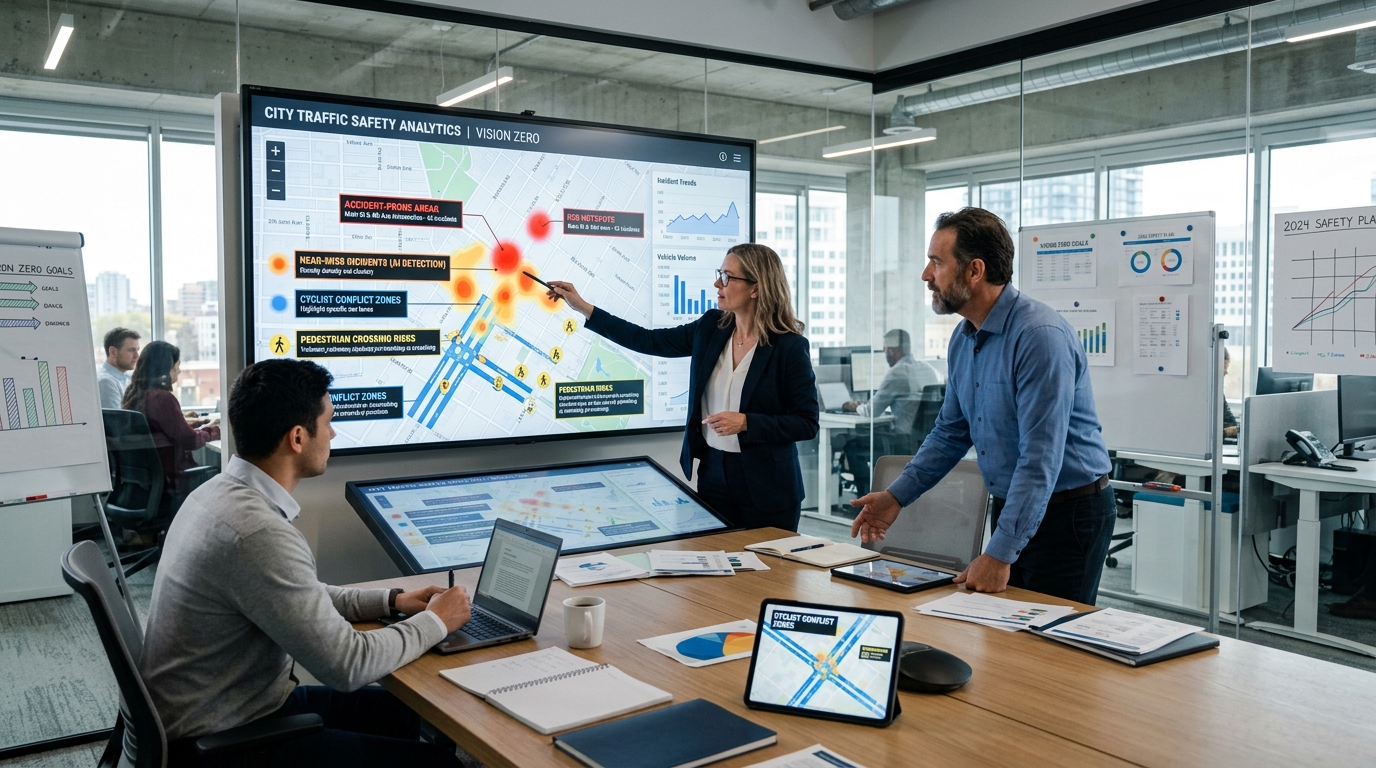
The biggest value of AI near-miss detection is early action. A city can redesign a dangerous crossing before several pedestrians get hurt. A delivery fleet can coach risky drivers before a serious rear-end crash. A school district can identify fast vehicle approaches near student crossings. A transportation agency can find merge zones where drivers repeatedly cut each other off.
This approach supports the broader road safety shift from reactive reporting to proactive prevention. The Federal Highway Administration explains that crash prediction tools can estimate crash frequency and severity based on geometric and traffic conditions. Readers can review FHWA safety analysis background here: FHWA safety tools and crash prediction information.
What communities can do with near-miss data
Near-miss data can guide practical changes. A city may adjust signal timing, add leading pedestrian intervals, improve lighting, install curb extensions, repaint crosswalks, add protected bike lanes, lower speed limits, or redesign confusing lanes. Transportation teams may also use the data to decide where speed safety cameras, warning signs, or targeted enforcement make sense.
AI safety data can also connect different accident trends. A location with frequent hard braking may relate to speeding. A road with repeated pedestrian conflicts may also have vehicle blind-zone risks. A corridor with many cyclist close calls may need protected space instead of painted lines. A ramp with repeated wrong-way entries may need better signs, lighting, or detection alerts.
Accident Wiki already covers related topics such as vehicle blind zones, speed safety cameras, wrong-way driving detection, work zone accidents, and vulnerable road user safety. Internal links can help readers move from this article into those deeper safety topics:
Why Vehicle Blind Zones Are Becoming a Bigger Urban Accident Risk in 2026
Wrong-Way Driving Detection in 2026: Why High-Risk Roads Need Faster Alerts
Why Vulnerable Road User Safety Is One of the Biggest Accident Trends in 2026
Drivers can learn from near-miss warnings too
Near-miss detection does not only help agencies. Drivers can also learn from warning patterns. Fleet systems may show that a driver follows too closely, brakes late, accelerates aggressively, or gets distracted near intersections. Personal dashcam tools and advanced driver-assistance systems may also warn drivers about lane departure, forward collision risk, pedestrians, or blind spots.
These warnings should not make drivers overconfident. Technology can miss hazards, especially in bad weather, glare, low light, poor lane markings, or unusual road layouts. Drivers still need to slow down, scan the road, leave space, avoid phone use, and expect mistakes from others.
Near-miss data can also help explain why small behavior changes matter. A few miles per hour can change stopping distance. One second of distraction can hide a pedestrian. Following too closely can turn normal braking into a crash. When drivers understand their own risk patterns, they can adjust before a collision happens.
AI near-miss detection should not become another tech buzzword. Its value depends on how people use it. If agencies only collect data and never redesign dangerous roads, the tool fails. If companies only score drivers without improving schedules, training, or vehicle safety, the tool falls short. If communities ignore privacy, public trust drops.
The best use of AI near-miss detection combines technology with practical action. Find the pattern. Confirm it in the real world. Fix the road design. Coach the driver. Improve the crossing. Slow the traffic. Protect the cyclist. Warn the pedestrian. Then keep measuring the results.
Accidents may look sudden, but many of them follow repeated warning signs. In 2026, predictive safety tools give communities a better chance to see those warning signs earlier. That makes near-miss detection one of the most important accident-prevention trends to watch.