
Wrong-Way Driving Detection Systems: Why High-Speed Head-On Crashes Need Faster Prevention
Wrong-way driving detection is becoming a bigger road safety topic in 2026 because wrong-way crashes can turn deadly very quickly. These crashes often happen on divided highways, freeway ramps, and high-speed corridors. When a vehicle enters the road in the wrong direction, drivers traveling the correct way may have only seconds to react.
This makes wrong-way driving different from many other accident risks. A pothole, poor lighting, or confusing intersection can create danger. But a wrong-way vehicle on a high-speed road creates an immediate head-on crash threat. That is why states and transportation agencies are paying more attention to detection systems, better signs, flashing warnings, camera alerts, and faster police response.
The Federal Highway Administration defines wrong-way driving crashes as crashes where a vehicle travels against the legal traffic flow on a high-speed divided highway or access ramp and collides with a vehicle moving in the proper direction. FHWA also notes that these crashes tend to be more severe than many other crash types because they often involve head-on or opposite-direction sideswipe impacts.
For Accident Wiki, this topic fits directly into road safety policy, accident-prone areas, blackspot analysis, and technology-based prevention. It also connects with your existing posts about dangerous road locations, vulnerable users, and urban traffic risk.
Why Wrong-Way Driving Detection Matters in 2026
Wrong-way driving detection matters because traditional signs do not always stop the driver in time. A confused, impaired, distracted, elderly, or unfamiliar driver may enter a ramp in the wrong direction even when “Do Not Enter” and “Wrong Way” signs exist. Once the vehicle reaches the main highway, the danger becomes much harder to control.
Detection systems try to stop the mistake earlier. Many systems use sensors, radar, cameras, flashing lights, and traffic management alerts. When a driver enters the ramp incorrectly, the system can activate warning lights around signs. Some systems can also alert transportation operators or law enforcement.
This layered response matters. The first goal is to make the wrong-way driver stop or turn around. The second goal is to alert officials quickly if the driver continues. The third goal is to collect data so agencies can learn which ramps, exits, and road designs create repeated problems.
What a wrong-way driving crash is
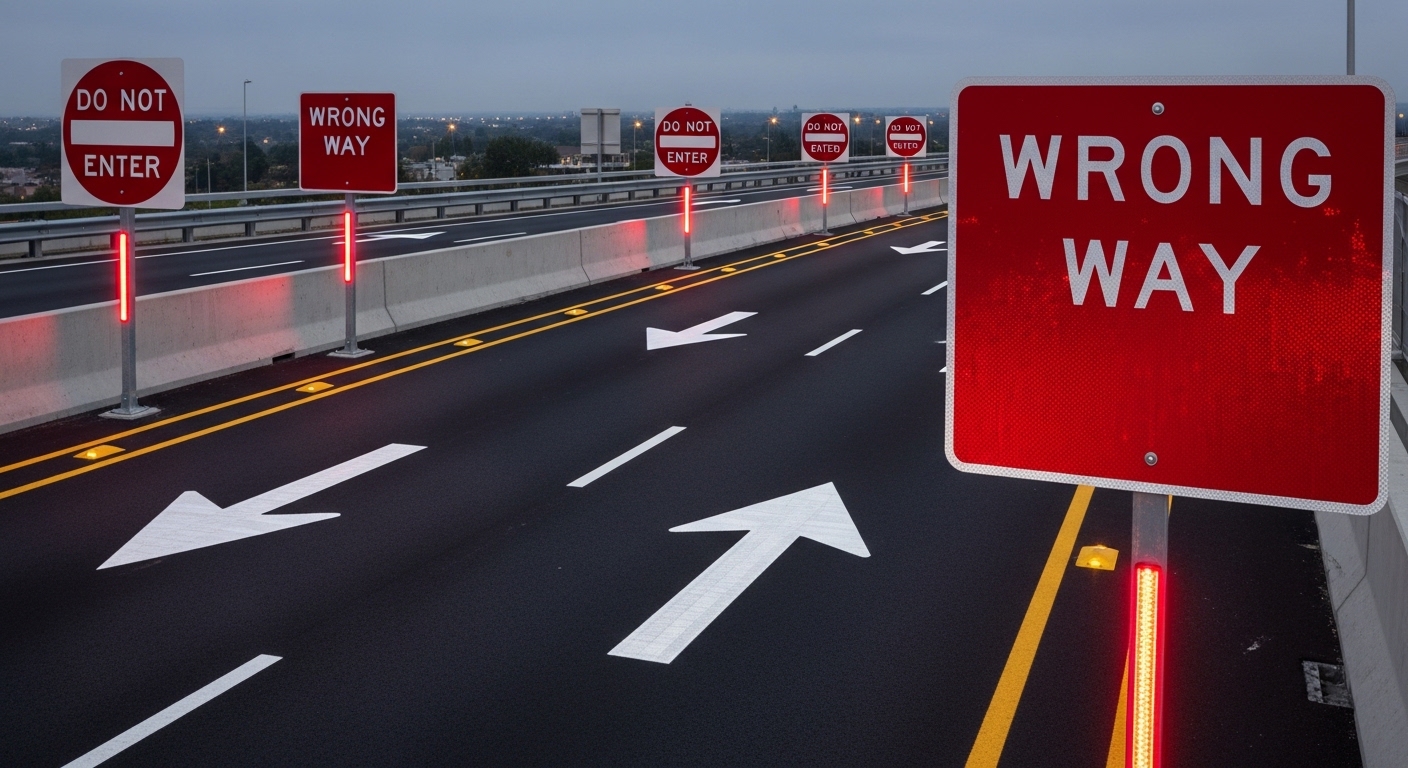
A wrong-way driving crash usually begins before the crash itself. The key mistake often happens at an access point. A driver may turn into an exit ramp, miss a sign, misread a road layout, or follow a confusing path at night. By the time the vehicle reaches freeway speed, the crash risk has already escalated.
These crashes are especially dangerous because they often involve vehicles moving toward each other. Even a moderate speed can create a severe impact when two vehicles meet head-on. On highways, the closing speed can become devastating.
Wrong-way crashes also create panic for other drivers. A driver traveling the correct way may swerve, brake suddenly, or collide with nearby vehicles while trying to avoid the wrong-way vehicle. That means one mistake can trigger several secondary crashes.
Why these crashes turn severe fast
Wrong-way crashes leave little room for error. Drivers expect traffic to move in the same direction. They do not expect headlights coming straight toward them in the same lane. At night, the confusion can become worse because distance and lane position are harder to judge.
Impairment also plays a major role in many wrong-way incidents. A drunk or drug-impaired driver may miss signs, ignore flashing warnings, or fail to self-correct. Fatigue and unfamiliar roads can also increase risk. A tourist, long-distance driver, or older driver may struggle with complex ramps or unusual intersections.
This is why prevention cannot rely only on driver judgment. The road system needs backup layers. Better ramp design, clearer signs, brighter markings, detection systems, and faster alerts can all reduce the chance that one mistake becomes a fatal crash.
Why signs alone may not be enough
Signs matter, but signs have limits. A standard sign works only if the driver sees it, understands it, and reacts in time. In a wrong-way event, the driver may already be confused. The driver may also be impaired, distracted, or moving too quickly.
Detection systems add urgency. Flashing LED borders, illuminated signs, and camera-based alerts can grab attention better than passive signs alone. If the driver does not respond, the system can still send an alert to traffic operators or police.
This approach turns a hidden hazard into an active event. Instead of waiting for a crash report, agencies can respond while the danger is still developing.
How Detection Systems Can Reduce Wrong-Way Crash Risk
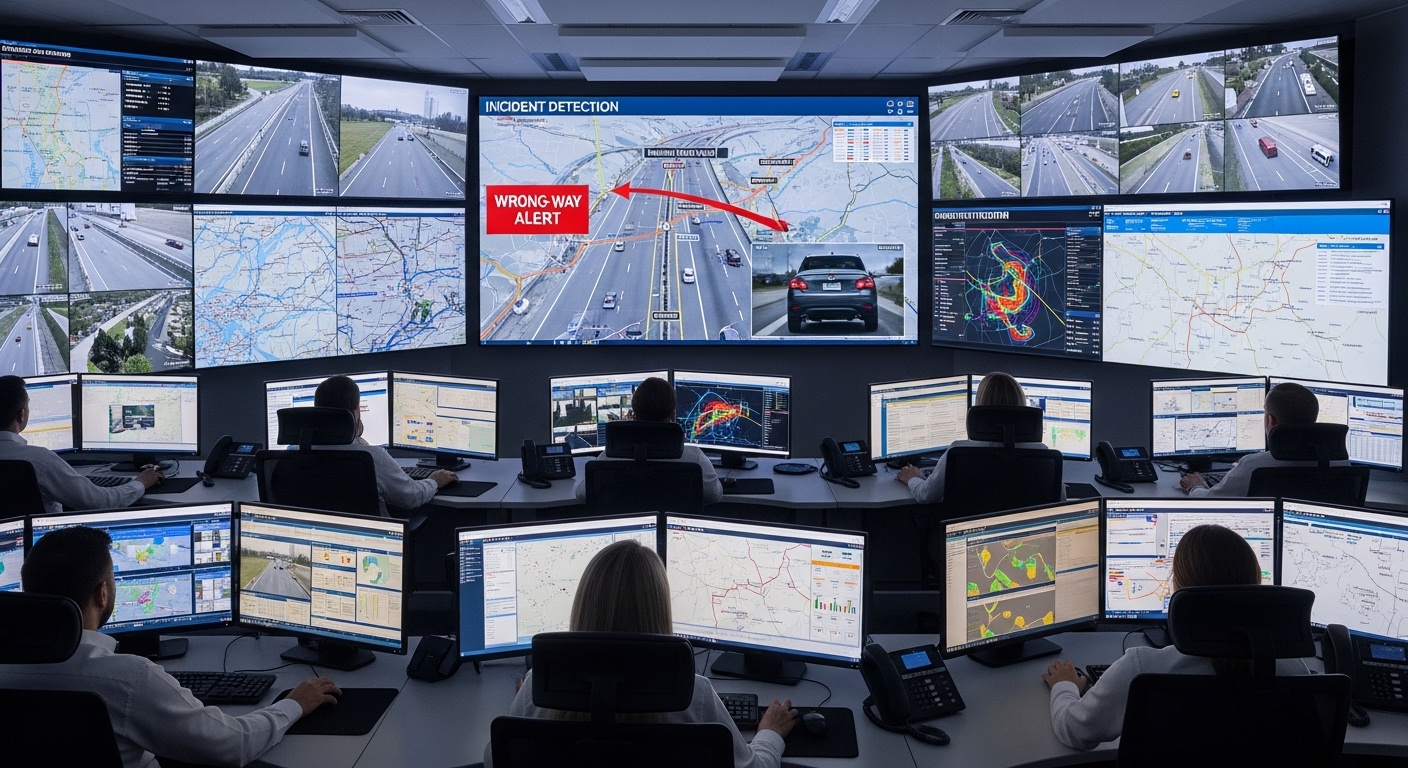
Wrong-way driving detection systems work best when they become part of a bigger safety strategy. Technology helps, but it should not replace better road design. The strongest approach combines engineering, enforcement, emergency response, public education, and better crash data.
Connecticut offers one useful example. Its transportation department says its Wrong Way Driving Detection Program launched after 13 wrong-way crashes in 2022 caused 23 fatalities. The program uses detection sites to prevent wrong-way entries, improve response times, and gather useful data for future safety work.
Michigan also shows why the topic is gaining attention. AP reported that wrong-way detection systems on a Grand Rapids stretch of US 131 helped reduce wrong-way ramp entries and crashes after installation. The system uses flashing lights and cameras to warn drivers and alert police.
What effective wrong-way prevention includes
Effective prevention starts with identifying risky locations. Agencies should study crash history, near misses, wrong-way entries, ramp layout, lighting, nearby alcohol-serving areas, driver confusion, and road geometry. Not every ramp needs the same treatment. High-risk ramps should come first.
Next, the road should communicate clearly. Drivers need visible “Wrong Way” and “Do Not Enter” signs. Pavement arrows, stop bars, lane-use arrows, reflective markers, and better lighting can reinforce the message. A confusing ramp should not depend on one sign.
Detection adds the next layer. Sensors can identify wrong-way movement. Flashing signs can warn the driver. Cameras can verify the event. Traffic management centers can alert police. Future systems may also send warnings to navigation apps or connected vehicles.
Where road agencies should prioritize upgrades
Agencies should prioritize ramps and corridors with repeated wrong-way entries, fatal crash history, poor lighting, confusing geometry, or nearby nightlife zones. They should also review interchanges where on-ramps and off-ramps sit close together. These layouts can confuse drivers, especially at night.
Blackspot analysis can help. Accident Wiki already explains why blackspots matter in road safety. The same logic applies here. If one ramp keeps producing wrong-way entries, the location is not random. It is sending a warning signal.
Better data can also help agencies act before the next fatal crash. Detection systems can record near misses and wrong-way entries that never become police-reported crashes. That data gives officials a clearer picture of risk.
How this connects to broader accident prevention
Wrong-way driving is not only a highway issue. It also teaches a larger road safety lesson. Serious crashes often happen when one mistake meets a system that gives no margin for recovery. Safer systems create more chances to notice, correct, and survive mistakes.
This connects with Accident Wiki’s article on traffic deaths, blackspots, and vulnerable road users. National safety trends matter, but local danger points still need targeted action. A wrong-way ramp is a clear example of concentrated risk.
It also connects with your post on vehicle blind zones and pedestrian safety. Both topics show that crashes are not always random. Visibility, design, reaction time, and system failure often shape the outcome before impact.
Readers can also connect this topic with vulnerable road user safety. Wrong-way crashes usually involve vehicles, but the prevention principle is the same. Roads should reduce the chance that one human error causes catastrophic harm.
Final thoughts
Wrong-way driving detection systems will not solve every highway safety problem. They also will not replace sober driving, better enforcement, or smarter road design. But they can give drivers and responders a faster warning during one of the most dangerous crash scenarios on divided roads.
The best prevention strategy is layered. Use clearer signs. Improve ramp design. Add pavement markings. Upgrade lighting. Install detection systems at high-risk locations. Alert police faster. Track near misses. Then use that data to fix the next risky location before another tragedy happens.
For more technical background, readers can review the Federal Highway Administration’s wrong-way driving safety resources. FHWA explains why these crashes are severe and why wrong-way driving belongs in the broader safety conversation.
The blunt truth is simple. A known wrong-way ramp should never stay known and unchanged. Once the pattern appears, prevention becomes a responsibility, not an option.