
Speed Safety Cameras in 2026: Why Automated Enforcement Is Becoming a Bigger Accident-Prevention Tool
Speed safety cameras in 2026 are becoming a bigger road safety topic because speeding remains one of the most predictable causes of serious crashes. A driver who travels too fast has less time to react, needs more distance to stop, and creates more force when a crash happens. That risk becomes even worse near crosswalks, school zones, work zones, high-injury corridors, and urban streets with pedestrians, cyclists, scooters, buses, and turning vehicles.
Automated speed enforcement is not a magic fix. A camera cannot redesign a dangerous road, replace safe driving, or solve every enforcement problem. Still, speed safety cameras can add a consistent layer of accountability in places where speeding keeps creating danger. When agencies use them carefully, they can support a larger prevention strategy that includes safer street design, lower target speeds, better visibility, traffic calming, and public education.
For Accident Wiki readers, this topic matters because road safety is shifting from reacting after crashes to preventing them before impact. If a corridor produces repeated speeding, near misses, injuries, or deaths, leaders should not wait for another crash before acting.
Why Speed Safety Cameras Are Trending in 2026
Speed safety cameras are trending because cities and road agencies face a difficult problem. Many communities want fewer serious crashes, but traditional traffic enforcement cannot cover every risky road at every hour. Police officers cannot stand at every school zone, work zone, ramp, arterial road, and high-injury corridor. Automated tools can help fill that gap when drivers repeatedly ignore speed limits.
The Federal Highway Administration describes speed safety cameras as systems that use speed measurement devices to detect speeding and capture photo or video evidence of vehicles that violate a set speed threshold. Readers can review the official FHWA speed safety cameras resource for background on how these programs work as a proven safety countermeasure.
The key word is safety. A strong program should not feel like a random ticket machine. It should focus on places where speed creates documented danger. That may include crash corridors, school zones, work zones, streets with heavy pedestrian activity, or roads where serious injuries keep happening despite signs and warnings.
Speeding is still a deadly crash factor
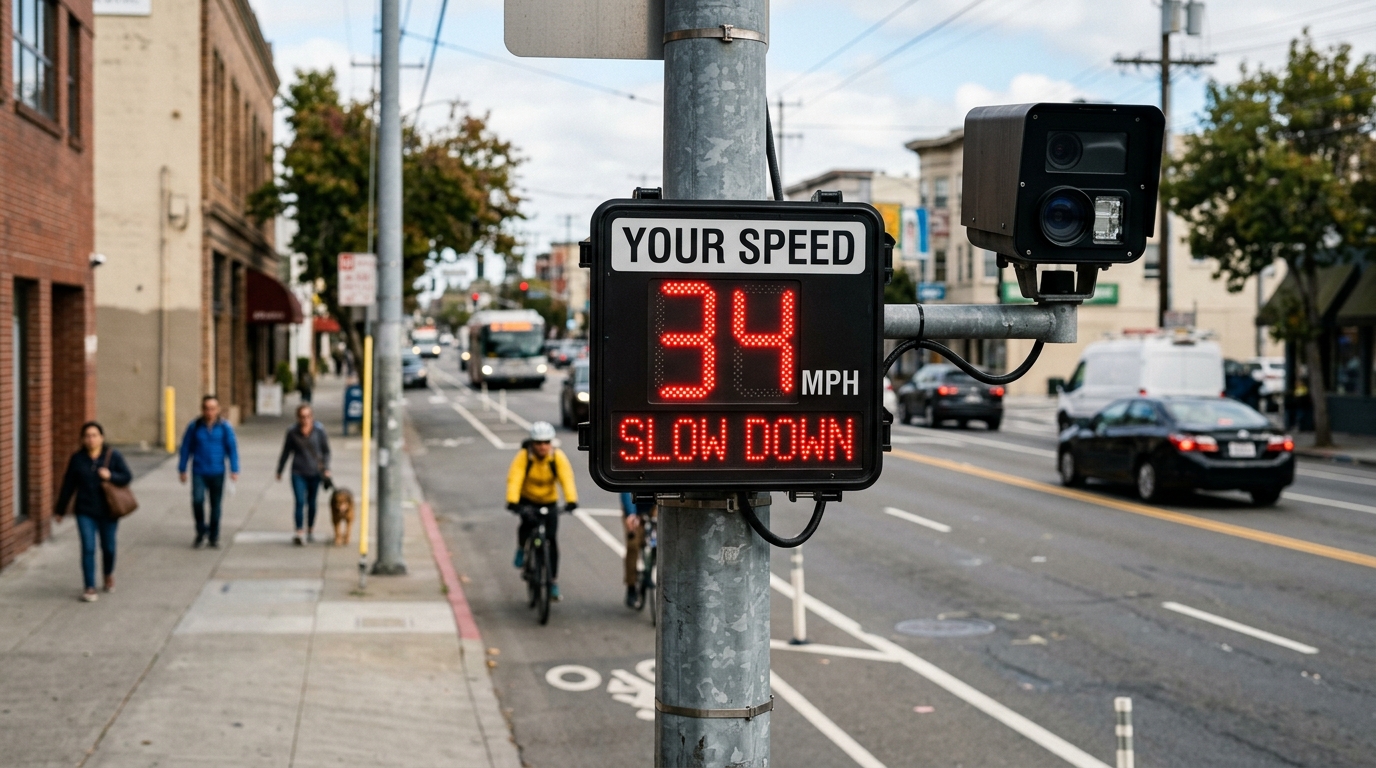
Speeding changes both crash likelihood and crash severity. A fast driver has less time to notice a pedestrian, stopped vehicle, cyclist, construction worker, turning car, or wrong-way driver. Once the driver finally reacts, the vehicle needs more space to stop. If impact occurs, the force is greater.
This is why speed management matters even when traffic deaths appear to improve overall. A national decline in fatalities does not mean every road is safer. Some corridors remain dangerous because speed, road design, poor visibility, and vulnerable road users overlap. Accident Wiki’s article on traffic deaths, blackspots, and vulnerable road users supports this point because crash prevention often depends on fixing repeat-risk locations.
A speed safety camera can help at locations where drivers continue to speed after ordinary signs fail. The goal is not only to punish one driver. The larger goal is to change the driving pattern before another crash happens.
Cameras target behavior at repeat-risk locations
The best camera locations should come from data, not politics. Agencies should look at crash history, speeding records, pedestrian activity, school access, work zone exposure, near-miss reports, and roadway design. A camera belongs where excessive speed creates real risk.
This location-based approach helps communities understand why enforcement exists. People may disagree with tickets, but it is harder to dismiss a camera placed at a documented crash corridor, dangerous school zone, or repeated injury location.
Speed management protects more than drivers
Drivers often think about speeding only from their own view. They may feel in control. They may believe they can brake in time. However, speed also affects people outside the vehicle.
Pedestrians, cyclists, scooter riders, motorcyclists, road workers, children, and older adults face greater harm when vehicles move too fast. Accident Wiki’s guide on vulnerable road user safety in 2026 explains why people without a vehicle shell need stronger protection from speed, blind zones, and poor road design.
Automated enforcement works best when transparent
Speed safety cameras create public debate because people worry about fairness, privacy, revenue, and government overreach. Those concerns should not be ignored. A camera program that lacks transparency can lose trust quickly, even if it has a safety purpose.
A strong program should explain where cameras operate, why those locations were chosen, what speed threshold triggers a citation, how revenue will be used, how drivers can appeal, and how results will be measured. Public reporting should include speed changes, crash changes, citation trends, and whether the program reduces injuries over time.
Transparency also means agencies should not hide cameras just to maximize fines. Visible signs, warning periods, clear notices, and public education can make the program feel more like prevention and less like a trap.
Fair programs need clear rules and public reporting
Fairness matters because road safety programs work best when the public understands the purpose. Agencies should publish camera locations, safety reasons, ticket rules, appeal options, and performance results. If a camera does not reduce speed or crashes, officials should review the design and location.
Equity also matters. A program should avoid placing cameras only in neighborhoods with less political power while ignoring dangerous speeding elsewhere. The safest approach uses crash data, injury risk, and community input together.
How Cities Can Use Speed Safety Cameras Without Losing Public Trust
Speed safety cameras should support a complete road safety strategy. A city cannot install cameras and ignore dangerous street design. If a road feels like a highway, drivers may continue to speed even after tickets. Good design makes safe behavior easier and dangerous behavior harder.
That means cameras should work with traffic calming, better crosswalks, shorter crossing distances, protected bike lanes, improved lighting, narrower lanes where appropriate, safer signal timing, and clearer signs. In some locations, the camera may identify the problem, while design changes provide the long-term fix.
This layered approach also connects with other Accident Wiki topics. Pedestrian AEB can reduce some crashes when a driver reacts late, but it works better when speeds are lower. Vehicle blind zones become more dangerous when drivers move too fast. Wrong-way detection matters more on high-speed roads because impact force rises quickly.
Cameras should support safer street design
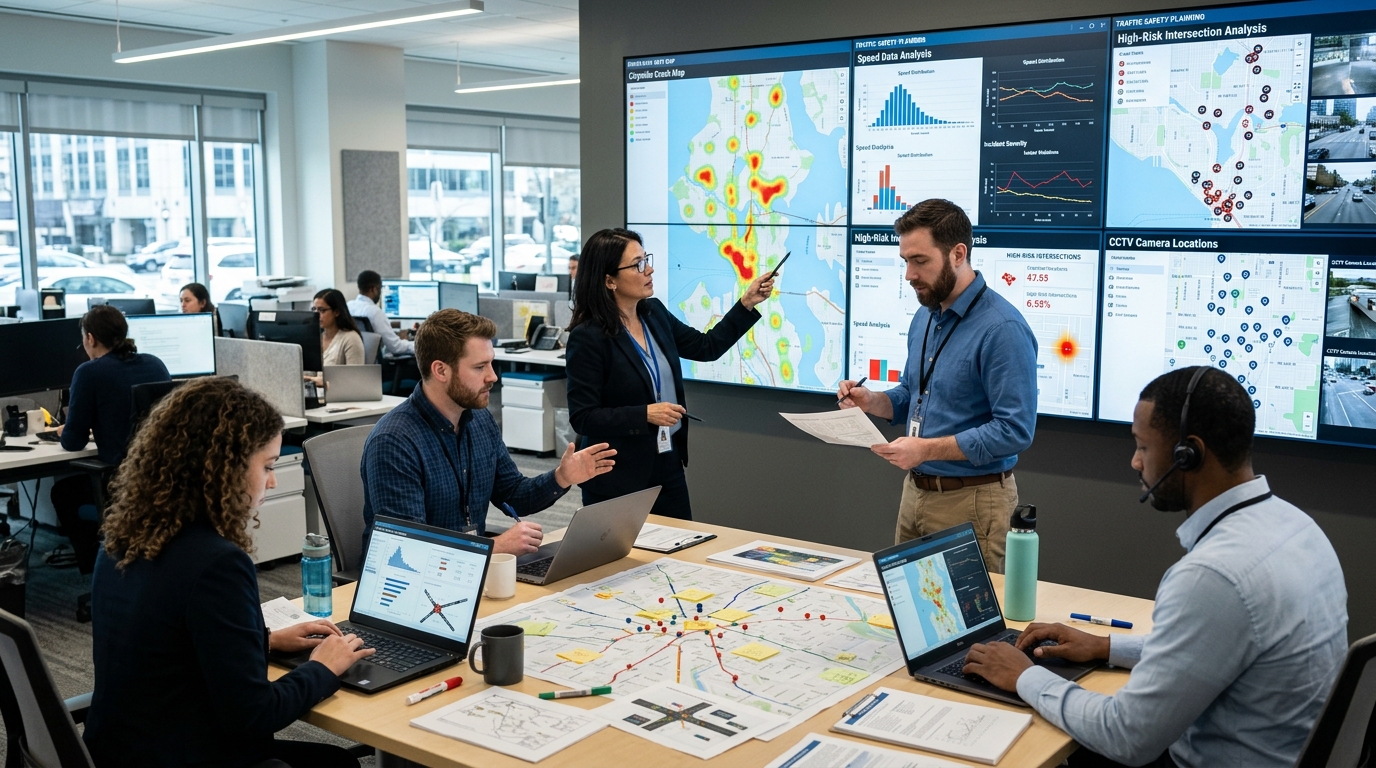
Road design sends a message. Wide lanes, long straightaways, weak crossings, and poor speed feedback can invite drivers to move faster than the posted limit. A camera may reduce violations, but the street itself should also tell drivers to slow down.
Traffic calming can include curb extensions, raised crosswalks, median refuges, protected intersections, speed feedback signs, lane narrowing, and better lighting. These changes help reduce crash risk even when no enforcement officer or camera is present.
Accident Wiki’s article on pedestrian AEB systems in 2026 makes a similar point about layered prevention. Technology helps, but safer roads require more than one tool.
School zones, work zones, and high-injury networks should come first
Communities should prioritize locations where speeding creates the clearest danger. School zones deserve attention because children can be unpredictable and harder for drivers to see. Work zones need protection because lane shifts, workers, trucks, and construction equipment create temporary hazards. High-injury networks matter because they concentrate serious and fatal crashes.
Accident Wiki’s recent guide on work zone accidents in 2026 fits this discussion because speeding and rear-end crashes remain major work zone concerns. A speed camera in a work zone should protect people, not simply generate fines.
Vehicle visibility should also stay part of the conversation. Taller vehicles, blind zones, parked cars, dark clothing, poor lighting, and busy intersections can hide pedestrians or cyclists. Lower speeds give drivers and safety systems more time to detect danger. Accident Wiki’s article on vehicle blind zones and pedestrian safety supports this connection.
Automated enforcement can also help identify patterns. If one corridor keeps producing violations after warnings, the problem may go beyond driver behavior. The road may feel too fast, lack traffic calming, or fail to communicate risk clearly. Agencies should use camera data to guide engineering fixes, not only issue citations.
Drivers still carry responsibility. A speed camera should not be the only reason to slow down. People should reduce speed near schools, crosswalks, work zones, curves, intersections, poor weather, and nighttime conditions. Speed limits are not invitations to drive at the maximum in every situation. Conditions matter.
Speed safety cameras in 2026 deserve attention because they sit at the center of a larger debate about enforcement, technology, fairness, and prevention. Used poorly, they can create frustration and distrust. Used carefully, they can reduce speeding at locations where crashes keep harming people.
The best programs are clear, data-based, public, and connected to safer street design. They explain the safety reason, warn drivers fairly, publish results, and invest in prevention. Do not treat cameras as a replacement for better roads. They treat cameras as one layer in a stronger crash-prevention system.
For Accident Wiki readers, the lesson is direct: speed is not a minor behavior problem. It shapes whether a driver can stop, whether a pedestrian survives, whether a work zone stays safe, and whether a high-risk road becomes a crash corridor. In 2026, speed safety cameras are not just a technology trend. They are part of a larger question every community must answer: will road safety policy act before the crash, or only after the damage is done?