
Work Zone Accidents in 2026: Why Speeding, Rear-End Crashes, and Night Construction Need More Attention
Work zone accidents in 2026 remain a serious road safety issue because construction zones combine several risks at once. Drivers face lane shifts, narrowed shoulders, reduced speeds, orange barrels, heavy equipment, workers, changing traffic patterns, and sudden slowdowns. When a driver speeds, follows too closely, looks at a phone, or reacts late, a normal road repair project can turn into a severe crash scene.
Many people think work zone safety only protects construction crews. That misses the bigger picture. Drivers and passengers make up a large share of work zone deaths. Pedestrians, pedalcyclists, maintenance crews, utility workers, and road workers also face danger when vehicles move through temporary traffic patterns too fast.
In 2026, work zone safety needs more than warning signs. Road agencies, contractors, drivers, fleet operators, and city planners need better speed control, clearer lane guidance, stronger nighttime visibility, smarter alerts, and faster response to recurring crash patterns. A work zone should not become an accident-prone area simply because the road layout changed for a few weeks.
Why Work Zone Accidents in 2026 Deserve More Attention
Work zones create temporary road conditions, but the risks feel very real. A familiar highway can suddenly narrow from three lanes to two. A shoulder can disappear. A merge point can move. Workers may stand near active traffic. Large trucks may need extra space to move through lane shifts. At night, glare, rain, fatigue, and poor visibility can make everything harder.
The Federal Highway Administration’s 2026 National Work Zone Awareness Week fact sheet reported 850 work zone fatalities in 2024. The same FHWA data showed that speeding played a role in 34% of fatal work zone crashes, while rear-end collisions appeared in 22%. Those numbers show why work zone accidents in 2026 should stay high on the road safety agenda.
For official background, readers can review the FHWA 2026 National Work Zone Awareness Week fact sheet. It highlights the main crash patterns, person types, and prevention messages connected to work zone safety.
Speeding turns work zones into high-risk corridors
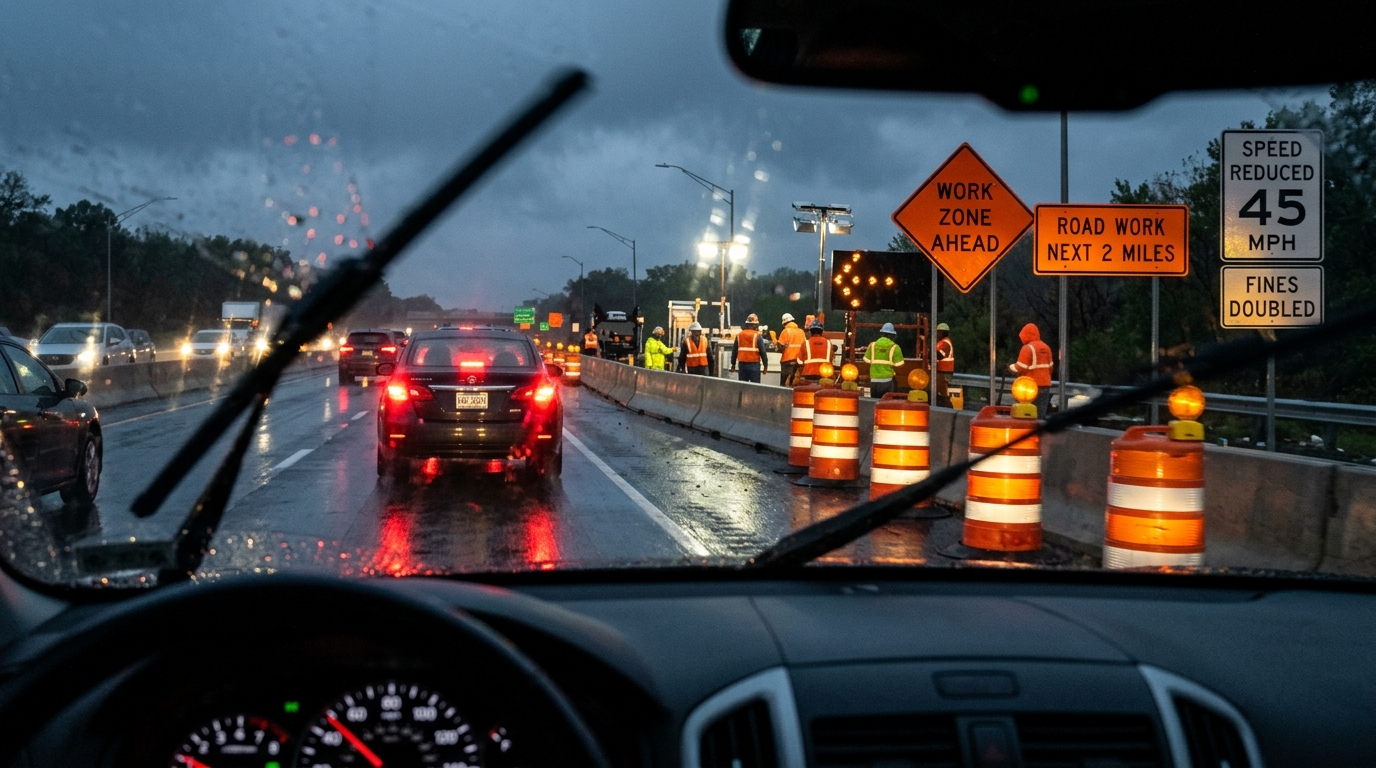
Speeding creates danger everywhere, but it becomes especially dangerous in a work zone. Drivers have less room to recover from mistakes. Lanes may shift quickly. Barriers may sit close to travel lanes. Workers, trucks, and equipment may operate near moving vehicles. A driver who enters too fast may not have enough time to brake when traffic suddenly stops.
Higher speed also increases crash force. A rear-end collision at low speed may damage vehicles. The same crash at work zone speed can injure several people, push vehicles into barriers, or trigger a chain reaction. This is why speed management belongs at the center of work zone planning.
Accident Wiki already covers broader speed and location risk through its article on traffic deaths, blackspots, and vulnerable road users. Work zones fit the same pattern because repeated crashes often point to a location problem, not only a driver problem.
Lower limits only work when drivers understand the risk
A reduced speed limit should not feel random. Drivers need to understand why the limit changed. Clear signs, flashing alerts, lane markings, visible workers, digital message boards, and consistent enforcement help drivers take the limit seriously.
When a speed drop happens without warning, drivers may brake too late or create traffic waves. Better work zone design gives people time to slow down before the most dangerous area begins.
Smart speed feedback can improve driver behavior
Digital speed feedback signs can show drivers how fast they are traveling before they enter the work zone. Queue warning systems can alert drivers when traffic slows ahead. Automated speed enforcement may also reduce dangerous behavior where local law allows it.
The point is not to surprise drivers with punishment. The point is to change behavior before a crash happens. A good work zone safety system warns early, slows traffic smoothly, and gives drivers fewer chances to make a severe mistake.
Rear-end crashes often reveal poor warning distance
Rear-end collisions are common in work zones because traffic speed can change quickly. A driver may round a curve and see brake lights too late. Another driver may follow too closely through a narrowed lane. A truck may need more stopping distance than nearby passenger vehicles. When several drivers react at different speeds, one late reaction can create a pileup.
Work zone planners should study where slowdowns begin, not only where workers stand. If congestion forms before the official work area, warning signs should reach drivers earlier. Queue detection, portable message boards, temporary rumble strips, and better merge design can reduce surprise braking.
This topic connects with Accident Wiki’s article on wrong-way driving detection and high-risk roads. Both issues show the same lesson: road systems should detect danger early and warn drivers before the crash window opens.
Large trucks need more stopping room
Large trucks and buses need extra space in work zones. They take longer to stop, need more room to maneuver, and may struggle with tight lane shifts. When passenger vehicles cut in front of them near a merge, the truck driver may have little room to react.
Drivers should avoid sudden lane changes around commercial vehicles in work zones. Agencies should also design lane shifts and merge areas with truck movement in mind, especially on freight corridors and busy interstates.
How Better Design and Technology Can Prevent Work Zone Crashes
Work zone safety improves when agencies treat the zone as a temporary road system, not just a construction site. Every sign, cone, barrier, signal, light, camera, and merge point should guide drivers through risk. If drivers feel confused, the design needs attention.
The best work zones reduce decision stress. Drivers should know where to go, when to merge, how fast to travel, and what hazard comes next. Workers should have clear separation from traffic. Emergency responders should have access. Traffic managers should monitor congestion and adjust warnings when conditions change.
Night construction needs stronger visibility planning
Night work helps reduce daytime congestion, but it creates a different safety challenge. Darkness makes lane shifts harder to read. Headlight glare can hide workers and equipment. Fatigue can slow driver reaction. Rain or fog can make cones, signs, and pavement markings harder to see.
FHWA’s 2026 work zone material notes that more than half of fatal work zone crashes in 2024 happened at night. That makes nighttime visibility one of the most important issues for work zone accidents in 2026.
Lighting, reflective materials, high-visibility clothing, advance warning signs, and clear pavement markings all matter. Drivers should also slow down earlier at night because the road ahead may change faster than their eyes can process.
Smart work zones should use real-time alerts
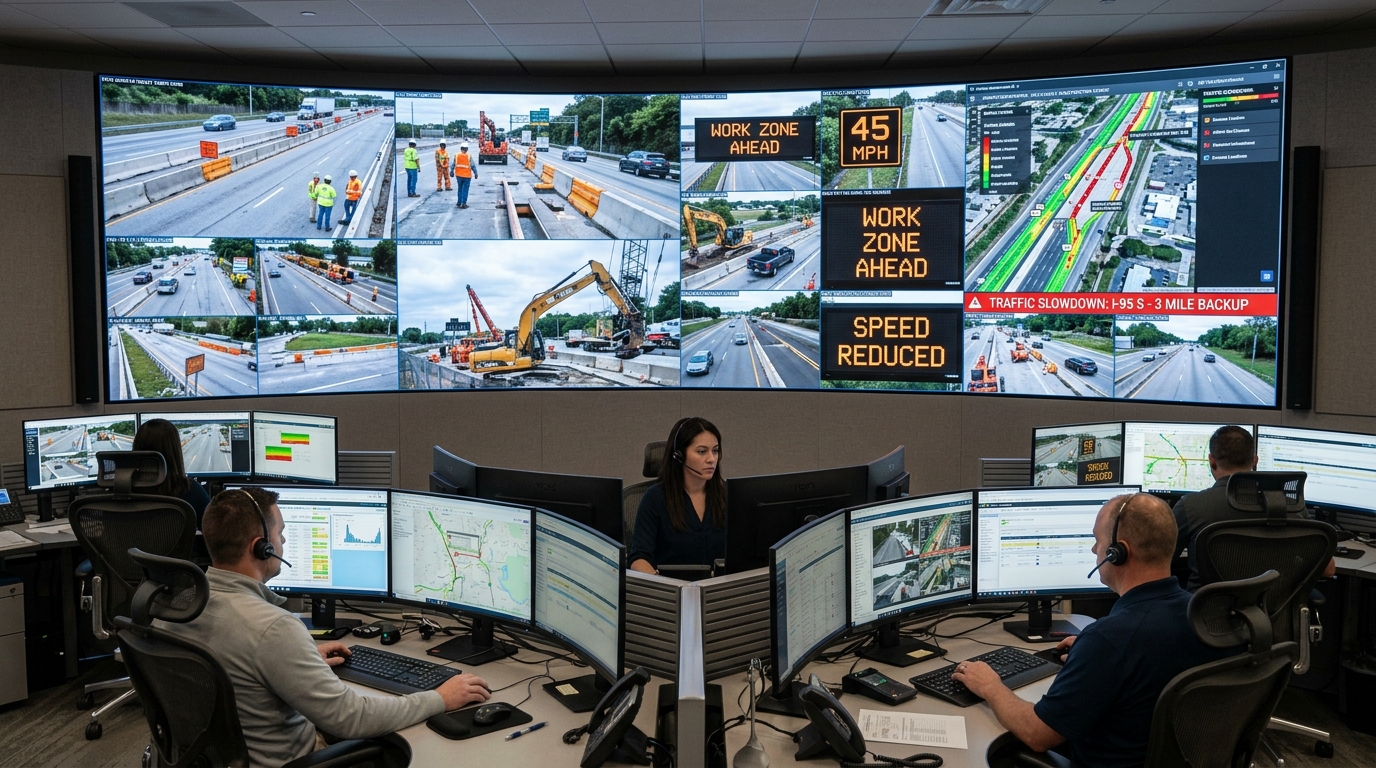
A smart work zone can use sensors, cameras, speed data, queue detection, and message boards to warn drivers about changing conditions. If traffic suddenly slows two miles ahead, a portable sign can warn drivers before they reach the backup. If a lane closure shifts overnight, updated messages can reduce confusion.
Technology should support good design, not replace it. Cameras and alerts help most when the lane layout, signs, lighting, and barriers already make sense. Accident Wiki’s guide on pedestrian AEB systems in 2026 makes a similar point: safety technology works best as one layer inside a stronger prevention system.
Work zones also affect vulnerable road users. Pedestrians, cyclists, and scooter riders may face closed sidewalks, blocked bike lanes, temporary crossings, or confusing detours. If the work zone pushes people into traffic, the design has failed. Accident Wiki’s article on vulnerable road user safety in 2026 supports this wider safety angle.
Blind zones can add another risk. Construction vehicles, trucks, barriers, and equipment can hide pedestrians, workers, or smaller vehicles. Your article on vehicle blind zones and pedestrian safety connects naturally here because visibility problems often create preventable conflicts.
Drivers also need a practical mindset. Slow down before the lane shift. Increase following distance. Put the phone away. Watch for workers and flaggers. Avoid aggressive merging. Give trucks space. Expect the unexpected, especially at night or in rain. These habits sound basic, but they directly address the patterns that keep appearing in work zone crash data.
Road agencies should also review near misses, not only fatal crashes. A work zone with repeated hard braking, sudden swerves, cone strikes, complaints, or minor crashes may already be warning officials that the layout needs changes. Waiting for a death before improving the zone turns preventable risk into policy failure.
Work zone accidents in 2026 are not random events. They often come from predictable conditions: speed, distraction, poor visibility, tight merges, sudden stops, confusing signs, and weak separation between traffic and people. The solution should be just as structured.
A safer work zone uses lower speeds, early warnings, better lighting, clear lane guidance, smart monitoring, protected workers, and stronger planning for pedestrians, cyclists, trucks, and emergency responders. When those layers work together, road repairs can continue without turning construction areas into crash zones.
The main lesson for Accident Wiki readers is direct: work zone safety is road safety. Every temporary lane shift, closure, and construction detour deserves the same careful planning as a permanent intersection or highway corridor. If a work zone creates confusion, speed conflict, or poor visibility, it creates accident risk. In 2026, safer infrastructure should include safer construction zones too.